
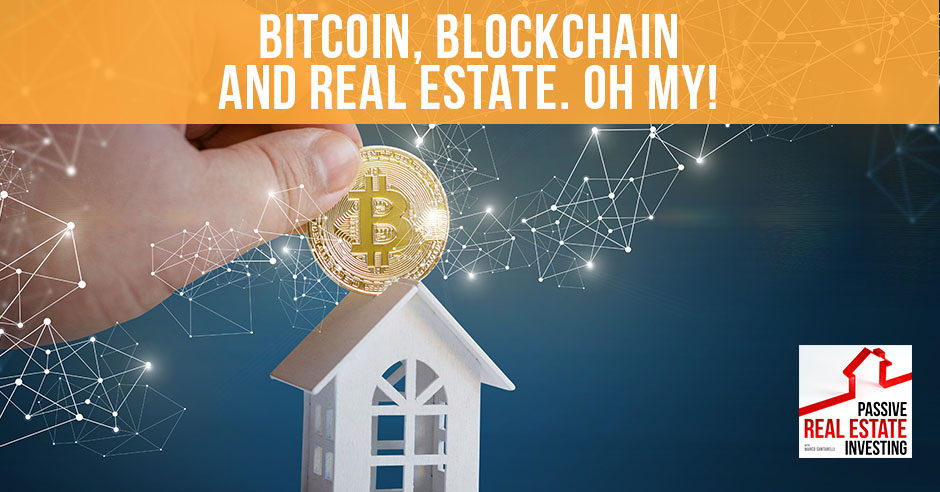
Everybody has heard of bitcoin, but some people really don’t know what cryptocurrency is. Cryptocurrency is essentially a decentralized form of currency, and bitcoin is the market leader. The blockchain technology is the technology behind bitcoin. Blockchain and cryptocurrency expert Mike Freemen says the crypto revolution can bring money into the pockets of people who have never had a bank account and just skip that entire system. It’s very liberating and powerful and the reach is virtually unlimited. Mike talks about bitcoin, blockchain and real estate, and says it’s just a matter of understanding the uniqueness of what blockchain is and how that’s going to apply to investing and real estate and contracts. Mike shares how his knowledge of blockchain technologies coupled with his investing experience allowed him to retire to Chile where he now spends his time advocating for freedom and seeking the next best way to cause more freedom in the world.
Download your FREE copy of: The Ultimate Guide to Passive Real Estate Investing.
—
Investing in cryptocurrency could be a good investment or it could not. With cryptocurrency being so young and the market being historically volatile, there is no real yes or no answer about the wisdom of investing in cryptos. It is with this in mind that we cover some pros and cons and some friendly but not professional advice here. Cryptocurrency, despite all its risks, is perhaps the most exciting asset of the 21st century, a decentralized digital currency that works on the very interesting and likely here to stay Blockchain technology. If you don’t understand what all these gobbly goop words mean, we’re going to define all of these things and what they mean. Trying to figure out what the Blockchain is or how it works is like the olden days of the internet when college students were asking,“What’s a modem?What’s this internet browser thing?Why do I need it to do my homework?” Trying to explain the future possibilities of the internet in the early 1990s is like explaining the future possibilities of Blockchain today. Blockchain, with all of its possibilities and what it will become, is not a fad.
If you missed our last episode, be sure to listen to Market Spotlight on the Quad Cities.
Enjoy the show!
– – – – – – – – – – – – – –
Learn more about Your Roadmap to Real Wealth.
Download your FREE copy of: The Ultimate Guide to Passive Real Estate Investing.
Get your FREE coffee mug by leaving us a Rating and Review on iTunes. Here’s how.
See our available Turnkey Cash-Flow Rental Properties.
Please give us a RATING & REVIEW (Thank you!)
SUBSCRIBE on iTunes | Stitcher | Podcast Feed
Bitcoin, Blockchain And Real Estate. Oh My!
It’s my pleasure to welcome Mike Freemen to the show. Mike is a student practitioner and a teacher of what it means to be free. After 25 years in the software industry and twelve plus years in investing, he knit together a life that includes everything he’s passionate about. Mike had his head deep in cryptocurrency and Blockchain related technologies for a long time now. He’s been interviewed on AM radio, spoken corporate settings, and in investment conference. He writes a newsletter about the block chain revolution. In 2017, his knowledge of Blockchain technologies coupled with his investing experience allowed him to retire to Chile where he now spends his time advocating for freedom and seeking the next best way to cause more freedom in the world. As of late, he’s been educating people on the basics of cryptocurrencies and Blockchain technologies. In his spare time, he loves enjoying incredible Peruvian food and aims to be an extraordinary dancerof Argentine tango. That’s an extremely great goal. Mike, welcome to the show.
Thank you very much, Marco. Great to be on.
It’s great having you on, Mike. I want to start off by throwing a disclaimer or a cautionary comment out there. I know a lot of people in the audience are thinking that, “Crypto might be the next best way to make a quick buck.” Full disclosure, Mike and I both own many different kinds of cryptocurrencies and we are not necessarily recommending these on the show or we’re not giving you investment or financial advice. This is purely for education and entertainment. Let’s dig in and learn a little bit about you, Mike. Tell us a little bit about yourself, how you got involved with Bitcoin and other cryptocurrencies. What brought you to this point?
When I first came across crypto in 2014,it’s a standard story that you hear in the space now of,“I wish I’d bought more or back then,” but I only dipped my toe in the water and ended up buying on an exchange that when went belly up, so I have nothing left over from 2014. It was the toe in the water I needed because when the opportunity came up late in 2016, I fairly familiar with crypto. I knew what Bitcoin was. I had done the study and so I just dove in headfirst late in 2016 and it’s such a fascinating space and revolutionary technology that I don’t stop. I studied all the time and it’s the only thing I ever want to talk about

You’re also passionate about it. We met back on the investment cruise that we went on with Robert and Kim Kiyosaki, Peter Schiff, and a whole bunch of other interesting and high-profile people. We had numerous conversations about cryptocurrency, Bitcoin and what it is, what you’re investing in, what’s coming up, and the utility and the value of these things. Your level of depth and understanding is far deeper than a lot of those so-called “gurus” that are out there that are selling newsletters and subscription services for literally thousands of dollars to get investment advice on it. You have a great level of understanding, which is why I wanted to bring you on the show and you’re clearly passionate about it. The best place to start is with the basics. Some people don’t know what cryptocurrency is. I would bet that most people don’t understand cryptocurrency, but everybody or virtuallyeverybody has heard of Bitcoin. Why don’t we start by talking about the definition of a cryptocurrency? What is that? We know that Bitcoin is a cryptocurrency, but let’s lay out the basics.
A cryptocurrency as an electronic payment method, so you can think of something like PayPal. How it’s different than PayPal isPayPal is based in dollars and uses bank accounts in the background. Bitcoin is a fully bank independent system. It’s literally a set of computers out on the internet independently contributed to the Bitcoin network that process transactions. When you use Bitcoin, you use an app on your phone, on your computer to send money, Bitcoin instead of US dollars directly to other people. That’s the high level.
Bitcoin is an example of one of quite literally thousands of different cryptocurrencies out there.
Bitcoin is the market leader. It’s the largest market cap coin out there. Everything I say,there are a lot of controversy around, but Bitcoin is the largest one out there. It’s arguably the most secure coin out there, but it’s also open source code. Meaning it’s publicly available andlegally copyable.Lots and lots of other coins have sprung up because they are trying to make a quick buck, or they think Bitcoin lacks a particular feature, so they’ll copy Bitcoin and add additional features that they think Bitcoin is missing. There’s something like 2,000 coins now out there. When you first dive in it, it’s a ton to take in.
A cryptocurrency is essentially a form of currency. The key thing or distinguishing feature about it is that it is decentralized. There’s not one central home or controlling or regulating body. It’s decentralized, meaning that it’s spread across a network of computers all around the world that check and verify and talk to each other on a consistent basis to make sure that transactions are legitimate, that nobody’s trying to hijack or tamper with or hack into the system. It’s got that benefit of being decentralized. But at the end of the day, it’s a digital currency that is not centralized like you have with the US dollar or being in a banking system, like the banking system we have in the US or any other country. Was that a fair assessment?
Yeah, absolutely. This is the hardest part to fully wrap your mind around because decentralized is a new term and cryptocurrency has really brought this into the limelight. These are the network of computersthat process your transaction when you send or receiveBitcoin. That network is built of computers that individuals or individuals running corporations have put online and run the Bitcoin client. That means there’s no Bitcoin company.There’s no Bitcoin CEO. There’s no single point of failure. There’s no office, there’s no person, there’s no technical support. I tell a lot of people the technical support piece because we’re used to if my credit card gets stolen and somebody charges something, the credit card company’s not going to hold me liable. Or if I messed something up with a bank transfer, I can call my bank and they’ll sort it out. With Bitcoin, one of the things that’s so revolutionary is you own your money, period. There is no customer support, there is no bank, you own your money. It comes with this incredible level of responsibility on the challenging side. I don’t think it’s bad. I think this is great, but it is challenging from a user’s perspective. That also comes with a whole slew of freedoms and power that take a lot of study and reading to fully wrap your brain around.
It’s because of that friction and complexity that the adoption rate has been slow, and for the most part, the great majority of the population don’t own any kind of cryptocurrency. The reason is because it’s a little complicated to understand, it’s a little complicated to acquire, and it’s complicated to hold and manage. I don’t think it’s all that complicated, but being realistic about it,for most people, it is complicated because you have to create an account with an exchange or two. You have to have a digital wallet on your phone or on your PC. There are a lot of pieces here. It’s not as simple as just carrying a bill or coin in your pocket.
Let’s talk the easy and the challenging.The easy side is you need an exchange to transfer your money into Bitcoin, and so the biggest exchange right now in the US is Coinbase.com. It’s relatively easy to set up an account. You upload your identification, you connect to your bank account, and you just transfer money in and swap it for a very small number of cryptocurrencies, so that part’s easy. The part that that the ease of doing that makes it easy to not understand is the security side. Coinbase, just like your bank, is hackable. It’s like any other website and we’ve seen in the news with Equifax and Sony hacks, these huge hacks with personal data being stolen. Your money in the cryptocurrency world is now digital. If those sites get hacked, it’s not just your social security number or your address and phone number that get stolen, your money can now be stolen. There’s no customer support, so learning the security side of cryptocurrency is critical and it’s something so easy to step over and never learn.
There are a lot more responsibility that goes with it because you have complete anonymity. You have complete freedom and you have a whole heck of a lot of anonymity. Do you want to touch on that, the anonymity portion of Bitcoin and other cryptocurrencies? A lot of people don’t understand that your transactions are, for the most part, invisible to the general public.
This is a fascinating conversation because you’re completely exposed and you’re anonymous at the same time. The Blockchain technology is the technology behind Bitcoin. What that amounts to is what’s referred to generally as a public ledger. All of these computers out in the cloud that are processing the transactions, they’re maintaining a ledger just like a bank would of all the balances and exchanges that go on. That ledger is public, meaning anyone with the Bitcoin software installed can go browse. You don’t even need the software installed. There are things called Block Explorers, and you can go look through the public ledger. What that means is that public ledger has your account number and your balance and your transaction history, but not your personal information. With a Block Explorer, I can go look at the full ledger by account number.

The anonymity side of it is my personal information isn’t there. You can’t go search the Blockchain for Mike Freemen and find out how much Bitcoin I have. However, as soon as you can interact with me, you learn my account number. I have to give you my account number for you to send me Bitcoin. As soon as you have my account number, you can use the Block Explorer to look through the public ledger and see, “That account number has this much money and has transacted with these other account numbers.”While there’s a level of anonymity, it gets broken very quickly and very importantly, there are companies out there who are using a data crunching to look at the connections between accounts plus social media connections. There was a study done with LinkedIn and a Blockchain data and they’re able to derive identities. While there’s a certain type of anonymity, Bitcoin itself is not something that you should rely on as a private means of transaction.
This is the crux of it all. The Blockchain is the amazing revolutionary component that underlies all these cryptocurrencies and it’s important to understand what Blockchain is more so than what Bitcoin is. Blockchain is, a ledger, but the way I look at it, this is my analogy, everybody understands what a spreadsheet is. They’ve looked at a spreadsheet and every row can be a record of some transaction. You can put data across that row in a spreadsheet, but if you imagine having that spreadsheet spread out across hundreds or thousands of computers all around the world and they’re essentially tracking the same data and each of those spreadsheets are talking to each other confirming that what one spreadsheet matches what is on another spreadsheet or ledger and that one is confirming with yet another computer on the network that that transaction is the same and it’s unbroken because they all have a unique fingerprint with what they refer to as a hash, then it becomes virtually impossible to crack or hack into that system. That’s the whole thing with decentralization. It’s not one spreadsheet. It’s hundreds, if not thousands of spreadsheets, spread out all over the place. Is that a pretty good analogy or did I miss something there?
There’s always more to say but that’s a great analogy. I’m going to try to put in the right words here without going in-depth because I’d invite your audience to go a study on YouTube. There are amazing videos by some smart people that explain this stuff. The two things together that are critical are Blockchain and what’s called consensus. Consensus is how do we get thousands of computers to agree on that’s a legitimate transaction, that this is the legitimate history that this ledger should have? We need to coordinate all those thousands of computers and how we do that as called a consensus or consensus protocol. Blockchain is the type of the database and most of it is uninteresting. It’s heresy to say this, but most of the blog is uninteresting. The pieces that become critical with Blockchainis a hash.
Hash is a fingerprint. It’s literally a small amount of data that represents the uniqueness or the identity of something.Every time you request a transaction on the Bitcoin network, the network is going to create that digital fingerprint of that transaction and include that in the next transaction. What that does is create this uniqueness and call it immutability. The Blockchain is immutable in that once you make a transaction, once a history of transactions comes to consensus on the network, that history is immutable, meaning even if you have lots and lots of computers, the computational challenge of changing any of history becomes essentially impossible.Within an hour, it’s effectively impossible to change anything on the Blockchain, so consensus is critical on Blockchains.
They solve two problems. One is how do you coordinate these individuals? Not a company, not a coordinated group. These are just any people anywhere in the world, any language. They plug in their computer and they work together. Consensus was a big thing. The other thing that is if you think about it, in a digital world, we’re used to files and whatnot. You can copy digital things. The other major problem that got solved was how do you not just copy one of your Bitcoin? We needed a way to have a Bitcoin be a unique entity in a digital space where nothing is not copyable and consensus was the answer to that. It is a massive revolution in what’s possible and it does take awhile to fully understand those words and how they fit together.
This is about as technical as we’re going to get for everybody in the audience.This can get far more technical than what we’re talking about, but we don’t need to go down that road. It’s just a matter of understanding the power and uniqueness of what the Blockchain is and how that’s going to apply to investing and real estate and contracts. If you break down the word Blockchainto two, it’s two parts, block and chain. The block is the chunk of data and every chunk of data is attached to the next one in what is referred to as a chain because of that unique fingerprint. The hash from the previous one attaches itself. This is not the technical explanation but essentially attaches itself to the next block. There’s a mathematical link that can only be one way and one way only and it cannot be tampered with. Once it becomes permanent, it’s permanent forever. This is not the best definition. I’m sure you could give a much better description, Mike, but at least this is the way I understand it in my head. It’s that unique link and fingerprint that attaches it to the next block, to the next block, the next block that makes it unbreakable. Is that a reasonably close description?
I want to whet your audience’s appetite with what’s possible here and it’s my favorite example. There are a lot of these, but I was in software for many years and I worked with a lot of co-workers who were immigrants from other countries and they have families back home. Many of them would work, making as much money as they could, and then send a big portion of their pay back to their family. Generally, what happens there is Western Union is how that’s done and it’s massively costly and the person on the receiving end needs a bank account. There are numerous crypto projects that are functioning in India. There’s a cool one in Nigeria where bank accounts are relatively rare, where bank accounts don’t exist, and where the connection to those banks are really poor. Sending money gets ridiculously expensive or damn near impossible.

What cryptocurrency now allows is in any of those countries that have simply a cell phone and connectivity, which is common nowadays,two billion people in the world are now connected via mobile apps. You download a Bitcoin app on your cell phone and you’re ready to go. All you need is other people’s addresses. In the Western world, we assume a bank account and we’re like, “How do I get my bank dollars into crypto?” That’s not the problem in most of the rest of the world. Most of the rest of the world needs any form of money and this crypto revolution can bring money into the pockets of people who have never had a bank account and just skip that entire system. The possibilities out there just amazing to go read about.
It’s very liberating and very powerful. The reach is virtually unlimited. Anybody in the world that can access the internet with a computer or an iPhone or any other kind of electronic device can be plugged into the Blockchain network and be able to transact and send and receive currency. That’s very liberating. What we’ve established at this point is that the underlying technology, which is the engine that makes this work is the Blockchain. That’s what I’d like everyone to focus on is what can we do with the Blockchain, not so much what is Bitcoin, which is the 900-pound gorilla, the original gold standard to the whole long list of cryptocurrencies. Do you think that cryptocurrencies are investments? I have my own opinion of it, but I want to ask yours first.
Anything that goes up in value as an investment, whiskey is a potential investment, so I definitely think it’s an investment. It can be likened most easily to the stock market where you’re buying a digital representation of ownership in something and then waiting for that something to go up. It’s an equity-based capital gain investment.
For the most part, I don’t consider it an investment per se because when I think of investments, I’m thinking of things that kickoff income. Cashflow, they give me passive income. If I want it to be a speculator and I’m looking at increasing the value of something, it’s more of a capital gain and may go up in value down in value, until you sell that investment or that commodity or whatever it may be, you don’t realize the gain.All you’re seeing is the price of something change. I understand what you’re saying, and I do agree with what you’re saying. However, from where I sit, I look at the portfolio of cryptocurrency that I hold to be more of a speculative investment, a speculative play.
It’s not generating income or cashflow. It could go up in value, could go down, I could lose it all. Many cryptocurrencies have come and gone. Personally, I don’t consider it an investment. I do consider it more of a speculation. It’s a little bit of a gamble and it’s extremely volatile. Everybody’s got their own opinion and that’s great. I’m glad you shared yours. What do you think makes one better than another? If you want to consider it an investment, what would make one better than another? Would it be its utility value or something else?
There’s a lot that goes into that. Just like the stock market, you’ve got your different types of analysis. I’ll call two of the three out. One is fundamentals, what is this coin actually offered? Bitcoin lacks certain features like privacy, real reliable, privacy. There are six major coins that have split off from Bitcoin and added real privacy and how they did that varies. If you think privacy is valuable, that’s the fundamental advantage to those coins and within those particular coins you can further look for what’s the mechanism and which one has name recognition and analyzability. You can do the same fundamental analysis you do with a stock, but you also have what JamesDines calls the mass psychology that we normally hear as herd mentality.That’s the less predictable form of, “I’ve got five privacy coins and one of them is super popular and maybe it’s the worst technology. Maybe fundamentally it’s not the best answer, but for whatever reason it was first, or it did good marketing and it gained notoriety.”
You’ve got the same thing in crypto where you got to study the fundamentals to know who’s the team, what kind of track record, what kind of technology do they use, how reliable is that, how tested is that.When you’ve got the mass psychology side of,“People like this logo and use this in commerce already and that’s why it’s big.”You’ve got the same considerations in stock and it’s more fun to me, being a tech geek, to study this instead of stocks, but it’s also harder when you get into privacy coins. The tech is crazy complicated. To wrap your brain around it and understand which one’s better, you’vegot to love the study process
That’s the complexity of this. It’s hard to consider this as an investment vehicle or investment class because of its complexity. It’s not easy to set up accounts, buy your cryptos, monitor it, and do research on it. You’re knee deep into it. You’re probably completely buried in it, let alone knee deep, but it’s complicated. It took me to figure it out and get used to it, but now I have a level of understanding. In looking back, I’ve seen the value increase a thousand-fold over the course of four weeks and then come right back down to where it was prior to that. The volatility makes it a little unnerving and scary for some people and it keeps them away. They want the opposite. They want stability and predictability more so than volatility. It will be interesting to see how it evolves.
One thing about the evolution that’s worth mentioning.When you look historically, we’re at the beginning. This technology was launched in 2009, Bitcoins’ launch, so it’s relatively new. If you look at Andreas Antonopoulos, who’s a big name in the industry, giving lectures and whatnot in Bitcoin, brilliant guy with an amazing background. He likens where we are now with cryptocurrencies to the internet and the ‘80s. Most people didn’t know the internet existed in the ‘80s. In fact, if you look, there’s a famous clip from one of the morning shows in 1995 and they’re asking questions like, “How do you send an internet?”They just have no idea. In the ‘80s, I have a good friend who was in IT for many years and he sent emails in the ‘80s, but you had to understand so much technical stuff to do it. Most people would look at that and go, “That’s not useful to me.”Crypto is in that world now where you can study your way up and learn how to do it, but it’s not easy and over the next few years, it will become easy. We’ll have addresses that look like emails or something and we can relate to. We’ll have security that makes sense. The tools will come and eventually, this will be accessible. It’s just nowhere near there yet.
It’s what they refer to as being user-friendly. It’s not user-friendly yet. The technology’s there, but we don’t have the wrapping and the interface to make it fun and easy to use like the browser is now.Even before Netscape, Mosaic came along. It was a little clunky and there were no features.You figured it out, you could work your way around and learn how to use it, but it kept getting better and better as the years went by. We’re in the beginning. Your comment is interesting. This is new, relatively unknown, very raw, and you mentioned it’s small.This is a good segue to the whole real estate thing and this is where I want to tie it all together.

If you look at the market of the crypto world, we’re roughly around $350 billion.That’s including Bitcoin, Ethereum,Ripple, EOS, all the major players out there, and that sounds like a lot, but let’s put this in perspective. We’re talking $350 billion versus the gold market being $6 trillion, agricultural land is $26 trillion, the equities market is$55 trillion, commercial real estate is $29 trillion, but here’s the amazing thing. Residential real estate is $162 trillion. You compare the cryptocurrency market of $350, billion to $162 trillion, it is a very tiny asset class. We’re talking about an industry that has no Wall Street or institutional money in it yet. There are no funds, there are no ETFs yet.It’s coming. Any comment about that?
That comparison is important. It is a tiny market. Hundreds of billions of dollars may seem big until you consider it in the context of the numbers you provided. When you look at a countries’ GDPs, the international derivatives market is three quarters of a quadrillion dollars. This is a tiny market and more and more you’re reading about institutional money wanting to get into this space and so there are proposals to the SEC to open ETFs and so far, those have been rejected, but one day one will open. That will blow up this market. It’s a huge driver for value when you consider that the value would have to get into the trillions to make any sense compared to any other asset class. That’s going to be part of the challenge for the institutional money. How do you build a system that gets its toe into a market cap that’s this small? It’s a huge challenge for the people working on it, but the first person to get in, that’s a lot of money to be made.
The tipping point some say is the $1 trillion mark. Once we hit that $1 trillion market cap, that’s when we can expect to start to see things going vertical as opposed to just chugging along the way it is now. Let’s tie this all together. Why should we care as real estate investors?How could this impact the real estate industry? Do you want to touch upon that? I’ve been reading up on this and I have some comments, but I’d like you to address this.
This is the internet in the ‘80s. If you consider what the internet is today, we live on it. We socialize on it, we communicate on it, we learn on it.The internetis fundamental to most modern life today. If you consider that Blockchain is in its internet in the ‘80sphase, you have to consider the future. Unless you’re 80 years old and not worried about the next 30 years. The rest of us are going to age into this world where Blockchain becomes a significant technology. Real estate wise, it’s one of my favorite examples of what the Blockchain will enable. In real estate, when you buy a property, you’ve got this escrow service. The escrow service is purely this third party that takes in a deed and takes in a deposit and takes in certain reports that all of these things come together from different parties, somebody sits and verifies all the documentation, clicks go, and sends out the deposit to the bank and the deed to the bank. It disperses the components that it took in to different parties based on the contract.
Blockchainhas also enabled something called a smart contract, which simply a contract that’s been put in the form of software. It’s been codified a software. What that enables is the automatic execution of contracts based on rules that are in software and agreed to upfront. If you take an escrow service, lots and lots of an escrow service can be automated. You can have a smart contract that accepts cryptocurrency, so there’s no human involvement in checks and wire transfers in any of that stuff. Somebody just sends Bitcoin to an escrow account. Then the smart contract can take the hash, a digital fingerprint of a deed. There are numerous pieces and how well this works is an amazing thing to read about. We don’t have all the answers yet, but we’re automating a lot of those pieces and things in smart contracts.
Then you’ve got the system. Another buzzword is trustless. The automatically executing smart contract is trustless in that you don’t need to trust anyone other than the escrow company themselves. They’re your trusted party and they rely on trusted parties for survey reports and inspection reports and whatnot. If you minimize the human involvement to just those parts where a human need to be involved and then you set up a smart contract to handle the rest of the transaction, we’re going to see Blockchain revolutionize how humans interact. Dan Larimer, the CTO of EOSIO, talks about Blockchain is not going to eliminate human involvement. It’s yet another tool to quicken and enable humans to get done what we want to get done. That future that’s sitting out there that’s that optimize,the earlier you start learning about it even if it’s really hard now, you’ll be way ahead of the game going forward.
An analogy I like to use when I explain this to people is what the internet has done to the travel industry. If you think back twenty years ago, fifteen years ago, how you book travel through a travel agent, you had to drive down to their office or maybe call them and they would share information with you. If they were online, you’d look up trips and there was no automation or booking with the airlines and the hotels and all that kind of stuff at some point, but then it got completely automated. People are still involved in small parts of it.It’s been minimized, but for the most part, it’s so easy today to simply go online, look up what you’re looking for, book, and everything is processed electronically and everything’s conditional. If this happens, then do that.
That’s what you’re talking about with smart contracts. It’s a conditional contract that if these certain conditions are met, then these are the outcomes or the results and that can apply to title. It can apply to property rights. You can have personal records, criminal records, credit history all on the Blockchain that is there for whomever to access. You can’t fudge that or lie about it. The Blockchain is such a powerful tool and it will be used in all levels of real estate. As a tenant, you know what is your eviction record, your credit score, your personal records, your criminal records, how often do you move? Maybe there’ll be some reputation scoring that ties into that based on how you left properties with previous landlords. All this stuff is there to ultimately serve us as real estate investors in a very smart way. What do you think about that?
The thing that sounds contradictory when you first hear it, but it is a power, is privacy and transparency.If you donate to a charity, the Blockchain enables you to see exactly where every dollar went. If you’re a tenant, you could own your data, as far as how you left apartments, rent history, payments and all that. You could own it, so you’re not reliant on equal facts to keep it safe. You keep it safe and you hold it.It’s on you to release it to a landlord but it says something if you don’t release it.You can release what you want. You may say, “I don’t want to release my medical records to a landlord, but I will happily release my rent payment history.” That combo of transparency and privacy is an incredibly powerful tool that we’ve never had before.
This may be a prediction to is the Blockchain and smart contracts might ultimately eliminate title insurance altogether because if there’s no disputing the chain of title on a property because it’s all in the Blockchain and it cannot be hacked or changed, and everybody’s agreed to it from one transaction to the next transaction to the next, then there’s no arguing about that clear title, that fee simple title. Why do you need title insurance if everything’s there for everybody to check and verify?
There are a lot of systems that we have set up overtime to compensate for a lack of reliability or possible corruption or things like that. This is going to enable an immutable record that will eliminate need for certain things.You and I are fascinated and involved with real estate, so these are easy examples, but there are so many other ones. I had an interview with the team in Nairobi who was looking to do this census on the Blockchain. As I know many people use cell phones, many people are related to other people, so they can use their social network to get to everyone and he expects rather than a year to be able to produce a census in about a month and have that combo of privacy and transparency. Transparency where you can see exactly how the process happened. You don’t have to doubt that as they do that the government would mess with the numbers. You know the numbers are legit and people can keep their names and ages and whatnot private, but you have the result stats that constitute a census. There are some amazing projects that will go on and it will completely revolutionize some industries.
This is a real disruption. It will be a disruption to many industries.There are so much more depth and breadth to everything we’re talking about, but we covered a lot of the basics. We talked about it as an investment and we tied it into how it can and probably will impact real estate and us as real estate investors. This is just the beginning. This is going to continue to unfold as the months and years go by. Mike, how can people find out more, learn more about you and the newsletter that you have? Maybe give out your website and whatever else you’d like to share.
You can send anything on my website at MikeFreemen.com. You can sign up for the newsletter. There’s an archive of past newsletters. The newsletter is aimed at getting the basics communicated. I spend a lot of time on Skype with friends teaching them how to do all this basic stuff. Then I thought, “I might as well share this,” so I’ve got a YouTube channel and the newsletter all to get that core basic education across.
It’s great and I appreciate you taking the time to educate our audience. Maybe what we can think about doing is in six months, nine months from now, maybe revisit some of this and see how things have changed and evolved because this is going to be an ongoing topic. It’s not just a onetime thing. Mike, I appreciate your time. Thanks for coming on the show.
Thank you, Marco.
– – – – – – – – – – – – – –
Download your FREE copy of: The Ultimate Guide to Passive Real Estate Investing.
Get your FREE coffee mug by leaving us a Rating and Review on iTunes. Here’s how.
See our available Turnkey Cash-Flow Rental Properties.
Please give us a RATING & REVIEW (Thank you!)