
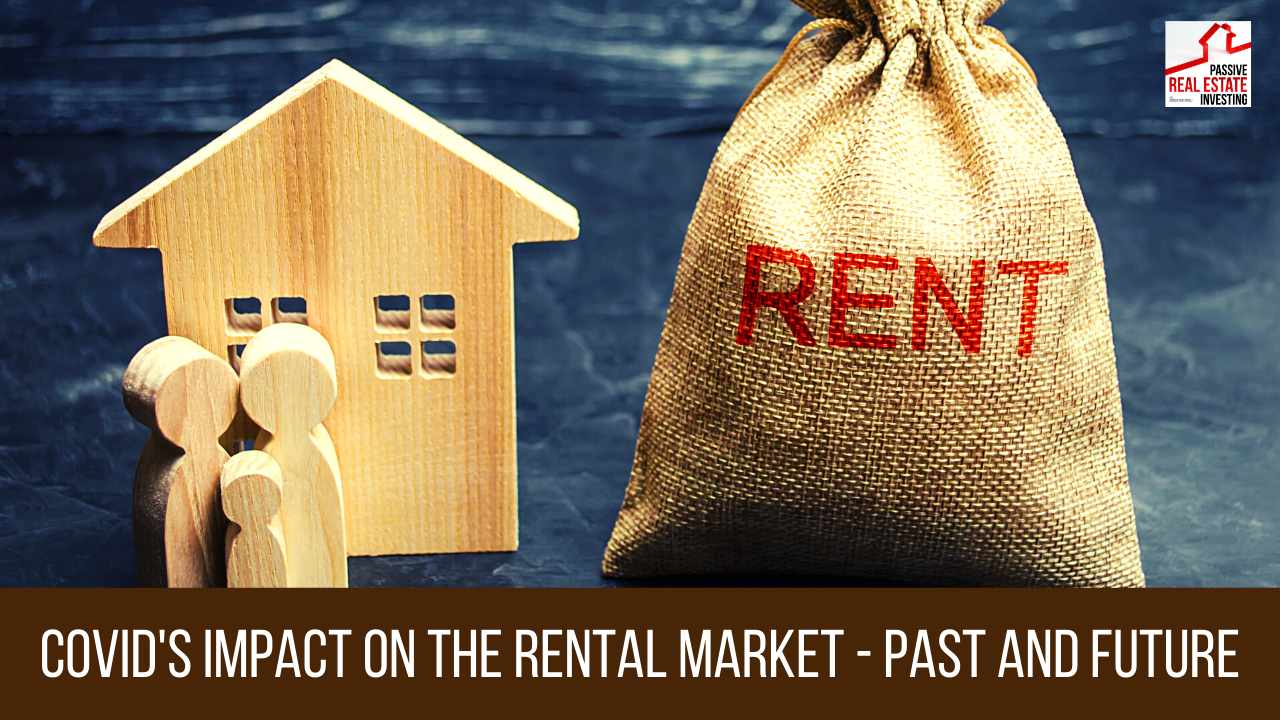
Well, today I want to talk a little bit about Covid’s impact on the rental market, both past, and future. I have a special guest coming on here in a couple of minutes, but I just wanted to touch upon it to a small degree, because this is really shaping housing trends and especially rental housing trends. You know, we are living in an environment right now where affordable housing in the US remains very, very low. In fact, most of the housing stock under the $200,000 price point, and I’m talking nationwide here makes up only 10% of the housing stock out there. So it’s very difficult to actually find an investment property that usually makes sense at the 200,000 to $250,000 price point and below all the way down to 100,000 or so that housing stock only makes up about 10% of the market.
And it’s diminishing the affordable housing in the US remains very low, almost historically low, actually potential homeowners have just been nervous because of COVID. You know, job security has been in question for many, many people, and they’re not sure how that’s going to unfold going into the new year 2021 and rental housing trends are now including more and more online and virtual type tours. And that’s actually one of the main trends we’re seeing virtual features become commonplace in terms of applications. Those are being signed online tours are not necessarily being done in person they’re being done through virtual tours, video 360-degree tours, even full-featured facilities, such as, you know, larger a grade apartment complexes are bringing in virtual workouts and virtual exercise classes and even virtual wine tastings. It’s just kind of crazy. And I know this doesn’t apply to most of us listening to this because we’re investing in single-family homes, duplexes, fourplexes, and whatnot.
But for those of you that are invested in apartments or syndicated large deals, I mean, those are the trends we’re seeing. You know, another one of the trends that COVID has been pushing in terms of the rental market is the importance of location. The location has become less and less important, especially if you have the ability to be mobile or you’re an open job seeker, and you’re looking for a new opportunity. Well, the entire United States, in fact, the world is your oyster. You can go anywhere. And for many people they’re able to work from anywhere. So you could live wherever you choose and work from wherever you want. And interestingly, more and more companies are actually allowing employees to work remotely through the technology that exists today, you know, be at Zoom or Skype. And, you know, obviously having a mobile phone and the laptop with an internet connection, a lot of work can be done remotely.
And we’ve seen this pretty much everywhere this year with large corporations that actually have call centers. The call centers have been either scaled back or closed, and people are actually taking phone calls and support calls from their homes. So this is just an ongoing trend. And I think it’s going to roll back to some degree, but not entirely. And it’ll be more and more commonplace to be able to work remotely from home or elsewhere. And this is also pretty true for cities that have large number of employees, very densely populated cities because a lot of people are either refusing or have a reluctance to actually being cooped up in very dense metropolitan areas where there’s a whole bunch of other people, at least until the fears subside with everything going on with COVID and how that’s just being perpetuated and propagated and whatnot. So location has become less important and we’re seeing tech hubs all over the place, losing people to the suburbs and rents dropping in these cities like San Francisco, San Jose, and any other market that has a very densely populated downtown or central core where there’s a lot of tech-related jobs because a lot of these tech jobs can be done remotely.
Another trend is demand for affordable housing was a problem before, but it’s continuing to rise and it’s becoming even a worst problem. I don’t even know if it’s a nightmare yet, but a large number of companies have laid off employees and that has prompted more and more people to seek affordable housing. And often that means that they’re moving further out from the city or the downtown core into the suburbs, which has created more demand in the suburbs, pushing prices up rental prices up constraining, tight supply as it already was. And so just a very interesting dynamic that’s going on right now. A very interesting trend that’s going on right now is that rental housing trends are up, up, and up. We were already becoming more and more of a renter nation prior to COVID just year over year. More people have been moving out of owning single-family homes or owning property and going into the rental pool.
But now this trend, this problem with COVID has really just pushed more and more people into the rental pool. So rental housing trends are on the rise and at the same time rent a home sales have dropped the decline in home sales compared to 2019 was the largest dip since 1982, when mortgage rates were actually at historically high rates in the 17% range and above. So in May of this year, only 3.9 million homes in the US were actually sold, which was the slowest month since 2010, which was right at the tail end of the great recession. So that’s a good thing for us as real estate investors and property investors because it is growing the rental pool size, which means more prospective tenants to rent are what I call safe, clean functional homes, but it’s driving more people into that space. So you as a real estate investor are benefiting from this because you have that wind in your tail, not in front of you as headwinds.
And another thing that this is creating as well in kind of an indirect way is as people’s leases are expiring in apartments in places that they are already leasing, but maybe don’t want to stay in what these people are doing is actually moving out and looking for homes, particularly in the suburbs. But they’re looking for more space because they are now more mobile and moving to other places, particularly suburbs, and even beyond the suburbs and that’s pushing rental prices up, property values up a lot of these smaller towns, the smaller second tier cities around the country. And even some of the tertiary markets are experiencing unbelievable booms where there’s just so many people coming in. It’s pushing prices up very quickly. And in many cases, people are seeing multiple offers on properties that go up for sale. And those properties often are sold within days sometimes even faster.
So it’s creating an interesting trend in terms of home buying as well as enlarging the rental pool, which obviously creates a problem for potential home buyers because they’re worried about not only the current economy, but the availability of housing stock, which has been very low this year because sellers have not been selling. So we’ve got this growing problem with lack of inventory, strong demand, a growing rental pool and lack of new housing in terms of household formations, particularly as new home builders are putting up new product. They’re not keeping up with existing demand, which is also growing rapidly a year over year and last but not least kind of a sideline trend, which doesn’t necessarily impact us as real estate investors. But the high-end rental market is seeing a drop in rental prices because that’s the market that is actually getting squeezed. That’s the high-end rental market that is feeling the pinch.
People are moving out of these large cities, like the tier one markets. And we’re seeing rental prices drop in San Francisco, Las New York, Washington, DC, and other places where we have high-end property. So what we’re really seeing are rental rates going up in the mid-market, low and upper mid-market. And they’re actually coming down in the upper market, the high end rental market. So again, not really something that affects most of us listening to this, but it is something to be aware of because it is a trend that coronavirus has been shaping this year and will probably continue to shape for the first half of 2021.
Download your FREE copy of The Ultimate Guide to Passive Real Estate Investing.
If you missed our last episode, be sure to listen to Limitless: Master Your Mind – Jim Kwik
Enjoy the show!
– – – – – – – – – – – – – –
Download your FREE copy of: The Ultimate Guide to Passive Real Estate Investing.
Get your FREE coffee mug by leaving us a Rating and Review on iTunes. Here’s how.
See our available Turnkey Cash-Flow Rental Properties.
Please give us a RATING & REVIEW (Thank you!)
SUBSCRIBE on iTunes | Stitcher | Podcast Feed
All right, with that, I’d like to bring on my guests so we can talk a little bit about COVID’s impact on the rental market and what he foresees the future to be. It’s my pleasure to welcome Logan Ransley to the show. Logan is the co-founder of Landlord Studio, a software platform designed specifically to help rental property owners track their income and expenses for tax time. He’s originally from New Zealand, 8,000 miles away at the bottom of the world in his spare time, he writes a lot of music, which I’d like to find out more about. So Logan, welcome to the show.
Thanks so much for having me appreciate it.
Hey, it’s my pleasure. So we’ve been talking on and off here, what seems to be for about a year and, um, I’ve watched your platform grow and you’ve done some amazing things. Why don’t you tell us a little bit about yourself? You’re obviously not from here with an accent like that. Tell us where you’re from and tell us a little bit about Landlord Studio.
Yeah, for sure. So my name’s Logan, obviously, I’m the co-founder of Landlords Studio, software for real estate investors wanting to track their income and expenses for tax time with obviously a few more property management features as well. So I’m originally from New Zealand yes. At the bottom of the world, um, miles away from, from the US, but this is where I grew up. And over the time we’ve, we’ve built this platform and we’re now located across 60 countries.
What’s this about, that you write a lot of music.
I’m actually a musician, funnily enough, which I guess is always a surprise to a lot of people. So I’ve been playing music for, Oh, must be about 16 years now, a guitar and sing. And once upon a time, that was a dream of mine. And maybe in the future it could come back. But yeah, I tend to write a lot of music and it was a good way to kind of widen down at the end of each week.
Yeah. So it’s more of a hobby now. It’s not a career path.
Yes. Um, definitely a hobby path at the moment.
Yeah. So you’re a co-founder of Landlords Studio, which I believe is landlordstudio.com. Is that the website? That’s correct. Yep. So tell us about Landlord Studio. What is it, who’s it for? Why does someone use it or why would they use it?
So I might just give a little bit of context about how we started, cause it ties really nicely into the problem that solves. So my co-founder Charles was living in the UK at the time actually. And he wanted to invest in rental properties because you know, the market was right and technology salaries were high. He was a software developer by trade. And when he couldn’t find software in the marketplace to essentially track profit and loss, it was a super simple need that he wanted. He didn’t want to use spreadsheets like I guess the traditional way of tracking all your finances. So he essentially just built his own app and put it onto the app store. And then from there it just started taking off where people were downloading it and providing feedback and saying, Hey, this is awesome. We’ve never seen anything like this before. So it’s been super interesting to see at unravel and basically what the platform is now is. So for landlords who are self-managing rental properties or even property managers and some cases, our platform offers a purpose-built method for tracking income and expenses and also harnessing automation through open banking and payment tracking and things like that. And the goal was really just as designed to replace the patchwork of tools that a lot of landlords and property managers end up using. So it was to try centralize everything in one place to just further, better their business.
So they use this in conjunction with their property management software because all property management companies have some sort of platform, whether it’s Buildium or several other platforms. I don’t remember what they are, AppFolio. So this works in conjunction with those or in parallel?
Yeah. So Landlord Studio is really great for seeing the financial sides of your business. Okay. A lot of this property management software, they focus on workflow automation and Landlord Studio is a really great way to see very simplified version of, your finances as a whole, what the income and expenses are, how much money you’re making on each property. And in a lot of cases where property managers are managing landlord’s rental properties, the landlords will actually use the software as well to just see how their properties are going from a week to week, month to month basis.
Got it. Okay. Interesting. Well, it sounds like a valuable asset, a valuable tool. So obviously you guys track data, you collect it because it’s just there on the platform amongst however many thousands of users you have. So what exactly are you collecting and tracking? Because obviously you can take that data, mine it and turn it into some sort of intelligence.
Yeah. So it’s probably important to know that we don’t necessarily track each individual person’s data. We tend to aggregate it as a whole and look at the trends of the data. Okay. So from that perspective where we’re seeing kind of data trends from, you know, rent collected the expenses that are paid on certain kind of categories or States, or even in some cases, types of expenses, mortgages, repairs, so all that kind of information aggregated across a large data set just allows us to see some really interesting trends in the marketplace, which actually allows us to almost match it up with, you know, what’s happening in the marketplace from the current affairs and the current events, et cetera.
So one of the main things that I wanted to talk about was obviously COVID and, the impact that it’s having on the rental market, both in the past and maybe talk a little bit about what’s going on in your opinion, going forward in the future. So from a high level, I guess, what are some of the major or key trends that you’re seeing as you look at this aggregated collection of data?

Yeah, for sure. So obviously Covid 19 had a massive effect on people in the U S and actually anywhere and everywhere in the world, but it’s also increasing the uncertainty in the rental market. The government stimulus action was implemented in May, did a lot to support those individuals that, you know, suddenly found themselves unemployed as well as supporting many companies that suffered from decline in business. But this financial aid was quickly spent. And by the end of July, we kind of expected to see a gradual increase in late and miss rent payments over the following months. But our data is actually showing, you know, a 2% decrease in payments made on or before the rent due date in August and September, and then followed by an additional 5% decrease in rent payments and October by the rent due date. What this is indicating is that, you know, wild rent is still being collected really. It’s just taking a lot longer, but it actually ties into something kind of a little bit bigger in terms of what media is reporting around evictions and around essentially total income being stopped from, or, you know, landlords not being able to receive income from tenants due to these evictions. Essentially, the data’s quite interesting to get a much deeper insight and potentially more like realistic insight into what’s happening at the moment.
So when you’re saying there’s a 2% decrease at a 5% decrease, are you talking about collections or are you talking about the dollar amount of the rents being collected? I was a little confused on that.
Essentially. It’s the total amount of rent collected each month. That’s what our data sets based on the rent collected is really how much is due and how much is expected. So for example, if you had a property that charged out at a thousand dollars per month and the rent was due on the first of every month, essentially what we’re seeing here is that total amount of rent that is being collected on that due date. What we’re seeing is actually the total amount of renters is not being collected on the due date, but it’s actually taking a lot longer to collect that total amount, which suggests that there’s essentially financial stress of the tenant of them not being able to pay on time.
Right. Got it. So, I mean, it probably goes without saying that the number one reason is because of, unemployment, you know, some people have been furloughed, people have lost their jobs permanently. Well, others have just been basically put in a position where we’ll call you back when things settle down in, the economy opens up again or we’re allowed to open up our businesses, but are there other reasons why we’re seeing these trends or is it just purely because of unemployment or maybe there’s fear or something else going on?
Yeah. A large part of it is due to unemployment. And I guess what the data is actually showing us is that, I mean, if we look at the media, a lot of the media is reporting that this is primarily due to unemployment or very kind of, I guess, anticipated kind of things that are going on. It’s hard to really know exactly what’s going on. And I’d say that there is a lot of uncertainty, there’s fear, there’s potentially different habits and spending due to the environment. So it’s, it’s quite hard to know, but I think one of the most interesting factors from our perspective is that we’re seeing the media report a massive amounts of evictions in some regions, um, particularly earlier in the year. But actually the data is showing that our vacancy rates haven’t really changed. It’s just taking longer for rent to be collected, which kind of suggests that tenants are still maintaining, being in the properties, but they’re just taking longer to make up those rent payments potentially due to those financial stresses.
Yeah. I mean, anecdotally speaking, that’s essentially what I’ve seen myself with my own portfolio and in talking to other real estate investors, but also in talking to property managers and some of our property providers around the country, they’re essentially telling me the same thing that collections are still very high. The defaults that were have been for the most part caught up there have been some evictions because some people just didn’t have the means to pay and they were permanently laid off. And so going forward, there was just no way for them to recover. So they had to make alternate plans and move elsewhere. But for those people who had late payments, interestingly, surprisingly, maybe a lot of them were able to catch up usually within a couple of weeks. And some of the worst cases I’ve seen was, by the end of the month. So by the following month, they were caught up, you know, where they got the funds. I’m not sure it could have been from stimulus money, could have been friends, family savings, whatever else it may be. But I think a lot of the fears that were out there were much larger than what reality actually showed. So what are you seeing on your end? I mean, what were your expectations and are the trends that you’re seeing from your data corresponding to those expectations? Or were you just surprised?
In a sense it was anticipated, you could see it coming. I’m not surprised that, you know, the media has actually hyped up a lot of these evictions and actually just speaking to our own users, um, the way that they’ve approached the situation and the impact that they’ve had just suggests that, you know, it’s actually slightly different and that, you know, they’ve handled the situation much better than, uh, maybe what people have heard and the news, et cetera. Yeah. It’s been really interesting to kind of hear exactly how those, I guess, approach the situation and the things that they’ve taken, the different kinds of methods that they’ve set up in their own business in order to, I guess, proactively prevent themselves from being in that position.
Yeah. My research on this, which is somewhat limited showed me, or told me that it was the upper quintile and the lower quintile that was affected the most. And I think there’s some common sense there, the upper quintile being, you know, the high-end homes that are probably renting for 10,000 a month or more obviously those people, if they were impacted would probably be hardest hit. But I think probably the largest demographic. And again, this is just my opinion. I don’t have the data in front of me to show me this, but the lower quintile, which is, you know, very low-income people and households, those probably are the people that got hit the hardest because they were in service-based industries or in businesses that were essentially forced to shut down permanently or temporarily. And they just don’t have the resources or the means and savings to be able to, you know, get past one extra month without having a paycheck.
So at least that’s what logic is telling me. So I think the people that are in the middle ground, you know, the landlords and investors, the people that you and I deal with, I think if they’re in middle income and upper middle-income areas, those jobs I think were the least impacted. And if they were impacted probably for the shortest periods of time, again, this is just kind of like combination of articles and different resources that I follow are telling me this. There’s probably some empirical data and evidence out there to back that up. But this is just what I’m seeing. Are you seeing something different or I don’t know if you collect this kind of data, but you know, in terms of upper income, middle income, lower income, but do you see anything along these lines?
Yeah, it’s really interesting. You bring that up actually, because I mean, we don’t exactly click that data, but we talk with a lot of landlords and a lot of property managers. Um, what they’re suggesting is that, and a lot of cases, well in particularly our case, the users that were most effected tend to have tenants that were in service-based industries. Exactly a lot. You were saying the ones that weren’t as affected were tenants that could work from home. Their jobs were a bit more flexible around, you know, being able to adapt to a climate like COVID and potentially that those tenants spouses could actually take almost like more of the financial stress, um, and actually kind of balance it out better. So it was definitely, I guess, tenants that were in lower-end jobs, service-based jobs where essentially a lot of those companies and a lot of those businesses had to close their doors temporarily or permanently. They were definitely the ones that were affected and therefore the landlords that had those tenants were affected as well.
Right. So is it a fair question to ask what real-life impact has been on investors and landlords and even to some degree property managers? I mean, we’re seeing it, I think we have a general sense of what it might be, but where do you think the dust is settling right now with all this?
Yeah, it’s interesting because in almost all cases, all of our users have been affected in some way, shape or form. Some of them have been affected much greater than others, but again, just again, just touching base on that last comment. I think it comes down to the combination of environmental factors, like for example, the tenant’s financial position, the job, and the spouse’s ability to, you know, support or support more of that financial load. Um, and saying that there have been some users that we’ve spoken to, that they experienced the worst case. Um, it was disheartening to see that actually some of them had to sell some of their portfolio because they just simply couldn’t sustain the mortgage payments. Um, the tenant stopped paying rent and basically created a real-life impact and we’ve actually seen it on a larger scale across our community groups, et cetera. Um, and it’s quite a real issue that may be not as not covered, um, you know, and typical kind of social media on the news or anything like that. But seeing it straight from the source is actually quite interesting and a little bit nerve-wracking, to be honest,
I don’t know if you know this, but when I hear something like that, I’m curious to know if those people were even cashflow positive from the outset. Because if, you know, if you have a small, negative cash flow on a property, but it’s in a solid area and it’s appreciating over time that doesn’t make it a bad investment or a bad rental, because those are typically temporary or short-term issues and you can make up for it. But if, you know, if you have negative cash flow, so you have no positive cash flow at the end of the year to support that investment. Now you’re losing your rent because you don’t have a tenant or the tenant can’t pay. And that goes on for two, three, four months or more. Yeah, that can be a big problem if you don’t have the reserves. So do you have any insight on that? Are these people who were already cashflow negative on the property and that just got a lot worse or were they just kind of skating on thin ice to start with?

Yeah, it’s really hard to tell, um, without them saying, Hey, how property was not cashflow positive, but yeah, I think it kind of brings out a wider issue that potentially the education around operating rental properties may be somewhat limited in some cases. And it ties into something that we’ve tried to encourage a lot of our users, or just at least provide content around them. That’s, you know, making sure you have enough cash reserve to sustain an economic downturn, which is easier said than done, but in a lot of cases we’ve seen, you know, some landlords just not have that reserve and not have that safety net to sustain that, which is actually really, it’s not a good thing at all because it actually impacts it’s got a ripple effect yeah. As we’ve seen in the past.
Yeah. And just goes to our, you know what I’ve said many times the general rule of thumb that I have, especially if you’re just starting out or if you have a small portfolio is to have two or three months worth of gross rent, banked as just reserves operating capital. You know, as you grow your portfolio, you can scale that back because you’re probably not going to have repairs or vacancies on all your properties at the same time or in the same month. So your need for that diminishes. But this is a great example of a time when this unexpected event COVID comes along and it affects some people or a lot of people and you need those reserves. So this is why you have reserves as you’re running a business and you just need to have that liquidity. So how go ahead.
Sorry. I think it just requires diligence saving and planning. And I think it’s becoming in a world where a pandemic can just strike within a matter of weeks and wipe out so much. I think it’s really important to take these experiences and just apply the learnings as we move forward, because it’s just, it can be a very unstable environment. Long-term yeah.
So I don’t know if you have information on this, but how have your users, I guess they would be investors or landlords, how are they responding or how have they responded to the impact of COVID now, obviously it hasn’t affected everybody. In fact, to be brutally honest about this, the impact of COVID on landlords has been relatively small in the grand scheme of things, at least from the data and statistics I’m looking at, you know, if you look at the pool of all rental housing across the country, what percentage of those have been affected by COVID? My estimation from everything I’ve seen is it’s been under 20%. It probably is peaked in as high as 20% or somewhere thereabouts in some of the hardest hit areas. But overall from again, what I’ve seen is we’ve seen probably an impact in the teens where landlords have had late payments or missed payments. And then as the months went by it fluctuated, but it kind of scaled back. So that’s what I’ve read. That’s what I’ve seen. I don’t know what you’re seeing, but again, I kind of going on, but my question was, you know, how are your users or landlords responding to all this?
Yeah, it’s been an interesting thing. And I think just to touch base on some context, the market has been an experienced, a lot of panic and stress purely based on the speculation of what would happen and what is happening. I’ve seen some really bad situations. All of landlords, property managers acting in a very reactive stance towards the situation. Um, there was one case where a landlord sent through letters to tenants with, you know, stern messages stating, you know, rent is still due if you don’t pay you are out, now I can understand both sides of this situation. Property owners still need to be paid. In most cases, they have large mortgages that still need paying, but the panic and the stress has caused both sides to be anxious and almost approached the situation in a negative way. And it’s a tricky situation because on one side you have the tenants whose income may have been wiped out.
And on the other side, you’ve got mortgages that need to be paid. But, you know, in some cases where region like regions have temporarily banned evictions, that can make it even more difficult. I think the only way, and what we’ve seen from our users is to come to a mutual agreement with the tenant. Now, for landlords that have been affected and example of how they’ve approached the situation has been doing a, you know, a temporary rent reduction with a running balance that can be paid off at a later point, um, kind of how we’ve been seeing in the data and what data as you know, rent still being collected. It’s just been paid off at a later point. And in most cases, the users that have been able to manage the situation well have taken a proactive stance about the situation, communicating with tenants, making them feel like they’re being listened to then most cases will actually make them respect the owner more, um, or the property manager. And I always give the example of like a business leader, as you know, empathetic by choice, stand by nature, understand their situation, but emphasize that rent is still due. So in the cases of landlords that have actually been affected by this on a larger scale, a lot of our users have taken quite a proactive stance, which I think is quite positive to see.
That was very well said. I know that a lot of landlords hands were tied because of moratoriums. So they were still billing. Rents were still expected, not necessarily collected. These tenants became late, quit and pay were issued. Thing is, as you can still do virtually everything that you would normally do in those situations, but what you couldn’t do in a lot of States with these moratoriums is evict the tenants. So that doesn’t mean that it’s a free ride. The tenants still needs to understand that they still owe this. Whether it’s now or later, they’re still have to pay it and it’s owed. And once the moratorium is lifted, they’re going to get evicted. And if they still, Oh, well, then there’s going to be a judgment placed against them. They’re still going to take them to court, get a judgment, and it’s going to haunt them and chase them wherever they go.
So they can’t escape it. It’s not a free pass. And I would assume, or at least think that most tenants understand that, but it’s probably wise for the landlord to actually make that known, make it clear by communicating that whether by letter or knocking on the door and just saying, look, Hey, you still owe this money. And I think that one of my property managers did in Florida, they just went door to door and made it clear that, Hey, I’m here to help. We’re going to negotiate a payment plan if you need it. And we did that with some of our tenants and it worked out, it worked out actually very well. The communication was there. The payment plan was appreciated and they realized that this will pass, but we’ll work it out. And at the end of the day, they’re not spending any more or any less than that, what they would have, it’s just a deferred payment.
And it’s kind of like looking at mortgages with a forbearance. If you have a forbearance, it doesn’t mean it’s forgiven. It just means that your payments are going to be delayed or tacked on towards the end of your mortgage. And in this case, you know, payments could be tacked onto the end of your lease. It’s whatever you want to work out. But at least that’s what I’m seeing in terms of how investors and landlords are responding to the situation that they’re basically trying to work terms out with their tenants. And there’s nothing better. I think in my opinion, that you can do than to actually communicate with your tenants because they are at the end of the day, your customers, you’re serving them and they’re paying you. So, why not communicate with them? They’re not this nebulous void and mysterious unnamed body. They’re a real person.
Right? Yeah, exactly. Tenants of people, people are emotional, people have problems when you’re trying to work out solutions that work for both tenant and the manager or landlord. I think it’s just better to take that proactive stance rather than a reactive stance and just make sure your communication is on point. Yeah, for sure. And I really liked that idea about a lot of landlords kind of consider these rental properties as, just as, as not really as businesses so that the way that they treat tenants and the way that they collect rent and all that sort of thing, doesn’t really tie into the way that, you know, a business owner would run a business. Um, and I like what you said about tenants being customers, because at the end of the day, a rental property is as a product, as a service, the tenants paying for that service. And I think it’s really important to acknowledge that when you’re, when you are dealing with situations like this.
Yeah. So let’s take a minute and talk about the future if there is a future. So what are your predictions? Where do we go from here with what you’re seeing, especially as it relates to COVID, we’re coming into 2021 here very quickly. What are your predictions about the future?
That’s an interesting question. Um, it’s very hard to predict what will happen in the future. What we predicted, you know, two months ago is now completely different. Our data suggests that, you know, changes needed to be made as temporary rent drops and other compromises between landlords and tenants, um, to kind of retain the current rental market stability. Um, and in most cases, this has happened, but you know, now we’ve just had an election in many parts of the US going into lockdown. It’s hard to know what’s going to happen. For sure. I feel like 2020 has been a very unpredictable set of outcomes for almost all industries. Um, but I think it’s really important to acknowledge that, you know, we had a huge amount of unemployment or Americans filing for unemployment in this year, 20 million plus. Um, and I think it’s really important to acknowledge that because it means that there is still a lot of work to be done to get us back on track, in order for the market to really stabilize, you know, apart from Covid’s day-to-day impact on our life, there needs to be a lot of jobs. Stimulus needs to be a lot of recovery to allow us to get back on track. So it’s very hard to know exactly what’s going to happen. Um, and we’re looking forward to bringing out our report, that will kind of bring a bit more light to this, by the end of December, which may give us a bit more insight into what 2021 is going to look like.
So here’s a follow-up question. You know, we saw unemployment kind of spike and didn’t stay there for very long, but in the middle of the year, it kind of spiked into the mid to upper teens and then slowly dropped back to around eight to eight and a half percent, which is where I think we are today nationwide. I mean, it obviously differs from market to market. There are very resilient markets that are doing very, very well. And then you’ve got markets that are suffering these larger tier-one metropolitan areas. Los Angeles and especially in New York and Manhattan areas around the country, but I think we’re coming into some stability. And so it’s not a crash per se, but you know, we’re coming into a kind of a holding pattern in terms of unemployment, just because there’s a lot of companies out there that either have gone out of business or they’re just not rehiring or they’re like restaurants is a good example. You can’t necessarily sit down and have dinner there, here in California, at least where I live, but you can take out. So there’s still a skeleton staff and there’s still people employed, but it’s not everybody. So I think in my opinion, the unemployment rate is probably settling somewhere in the seven to 8%. And it probably will be there for a while until it starts to improve after maybe vaccines come out or fears drop, but we’ll get back to a state of normalicy. My prediction is that we’re going to continue on the path that we’re on for the next quarter or two. So the next three to six months, do you see that as well? Or do you think that we are going to have a harder time come the new year or are things going to improve after the new year?
I think it really depends on how we tackle this COVID situation. Um, it’s obviously talked about a lot, a lot of countries are doing it differently. One thing that I’m quite fascinated about is that kind of spike and unemployment, and then it tapering off really quickly because this is, this all happened in a matter of few months, which is quite an outlier. If you look at historical situations like this. Yeah. So it’s really hard to know exactly why we, you know, spiked to 20 million, um, and the unemployment, and now we’re down to, you know, lower teens, cause that’s a huge number difference. So it’s really hard to know exactly what’s going to happen. It all depends on how quickly we get this COVID under control and how we can adapt to, I guess, the job situation for a lot of these for a lot of tenants specifically, um, moving into 2021. So I guess my prediction is probably it’s going to stabilize over the three to six months as well. I’d say by the end of Q2 of next year, we should have a, you know, a bit of normality, a bit more, a bit more stability in the market, um, as things kind of get back to normal, but I think entirely depends on the progress we make with this pandemic and whether or not vaccines come out.
Yeah. I really think it’s a question of when, not if, of course, but I do think by the middle of next year, we’re going to have a much more stabilized path forward. We’ll have more clarity than we have today. And everybody’s talking about vaccines coming out here in the next one to two months. So the question is the quantity, for those that want to take it. But you know, I’m a big believer and I’m a huge fan of free markets. And I honestly believe that the less people that are putting their finger into the markets and trying to manipulate or fix them, and I say, fix in air quotes, the faster the market will figure it out and recover. It’s just, you know, a very basic principle of Austrian economics is just free markets know how to correct themselves and there’s price discovery and that just adjusts. And for anybody listening to this, and they’re not familiar with Austrian economics, you really, really should take a look at understanding how that really works because that is how free markets truly operate.
Yeah. They’re much more efficient. So yeah, you know, of a time they do figure themselves out much more quickly than, you know, if there was government intervention or government control around trying to fix the problem.
Yeah. So let’s just wrap it up here with any kinds of tips or suggestions that you might want to throw out to our listeners here. You know, what might you suggest in terms of safeguarding yourself, if you have rentals, especially if you’re self-managing of course, against, you know, lost rents or, rears in rents going forward.

Yeah, for sure. So I’d probably touch base on potentially three main aspects and it ties back into our earlier conversation, particularly around diligence saving and planning, think having reserves to protect yourselves in case of events like this is just paramount. And I think it’s actually a business principle. That’s just not applied enough in rental businesses. So from my perspective, that’s something that really needs to be well thought about and to take these lessons that we’ve experienced this year and just apply it as we move forward to, you know, just allow us to make these investments, as long lasting as possible. Um, the second is definitely that communication with the tenants. Now, I think communication is something that should be applied, you know, not just in COVID, but in general, if you’re a property manager specifically, you know, margins are much slimmer, you’re taking a percentage as imperative that you maintain a tenanted property.
And I think empathetic communication with tenants is just absolutely key for making this work. So communication is just something that I’m very ambulate, I believe a lot in, and it’s potentially not treated as something that’s as important as other aspects of, you know, the rental business. So definitely a high emphasis on that. And then, you know, at the end of the day, tenants are people. So when you’re trying to work out solutions, sometimes the solution is not going to be the most beneficial for the owner, the rental owner or the property manager. Um, but I think it’s the best ways to come to some sort of meeting, or midway point where it’s not a hundred percent perfect for the tenants, not a hundred percent perfect for the landlord or property owner, but at the end of the day, it’s probably the best outcome to maintain, you know, any sort of stability in your rental property.
And lastly use software to track everything you said it before most property managers use software to track and manage all the properties. And that’s just because, you know, spreadsheets and paper, receipts and outdated workflow methods are just very hard and it actually becomes a lot harder when you’re trying to keep a track of a risk to see the financial impact on your property. And even to produce, you know, a balance that you would like to recoup later on to the tenant for that I would suggest Landlord Studio. So give it a try if you’d like, um, but there are many other, softwares out there, but I think that’s the most important is just to make sure that you’re systemizing your business much better as you move forward.
It was a great list and actually kind of set it up at the very end there for a perfect segue to tell our listeners how they can find out more about you and more specifically Landlord Studio. So why don’t we just close up with you, telling everyone how they can find more information on Landlord Studio and whatnot?
For sure. So just feel free to jump on our website, www.landlordstudio.com. We have all the information there, or the frequently asked questions with a number of different resources and content. That’s free for you to check out, and then just feel free to reach out to us at any point with, you know, a live chat on our website. You can message our team and we’ll be happy to answer any questions you might have about, you know, either the software or, you know, just anything that’s going on in the real estate industry at the moment.
And you guys do a monthly or quarterly, a rental market report or something like that?
Yeah. So we do a quarterly, sometimes every two months, rental report that covers, aggregated data to essentially produce the trends and to tie that into current events and how things are moving in the industry, we match it up with what’s going on, what’s coming out, what has been, to allow us to know and potentially predict and safeguard ourselves against future kind of events.
Good stuff. Well, Logan, I appreciate you taking the time today. Thank for coming on the show.
Not a problem at all. I really appreciate it, Marco Um, it’s great to catch up again.
All right, well hang tight Logan. I’m going to wrap it up here. So everybody listening, thank you for joining us today. Download our free report. The Ultimate Guide to Passive Real Estate Investing. You could find that on both our websites at noradarealestate.com and passiverealestateinvesting.com. Remember to get a free strategy session with my team. If you are looking at building your portfolio or expanding it, remember to subscribe. If you’re new to the show, leave us a rating review on iTunes. We greatly appreciate it. And I do read all of them. So thank you for that. And once again, thanks for listening. We will see you on our next episode.
Download your FREE copy of: The Ultimate Guide to Passive Real Estate Investing.
Get your FREE coffee mug by leaving us a Rating and Review on iTunes. Here’s how.
See our available Turnkey Cash-Flow Rental Properties.
Please give us a RATING & REVIEW (Thank you!)