
Download your FREE copy of: The Ultimate Guide to Passive Real Estate Investing.
—
On this episode, I wanted to do something a little different. I want to bring on a friend of mine named Michael who started off with single-family home investing and moved up into larger multi-unit properties. Generally speaking, we refer to that as a multi-family real estate, but for all intents and purposes, we’re talking about apartments. I wanted to bring him on to give some contrast to investing in the residential real estate, the one to four-unit properties. When we talk about multi-unit properties, we’re talking about two categories. There are the small multi-family properties, which are properties that contain two, three, or four units. Then we’re talking about large multi-family properties and those are properties that have five or more units.
When we get into five or more units, we’re referring to commercial properties. These are properties that don’t qualify for residential or conventional financing. You’re talking about commercial properties fall under different guidelines when it comes to financing. The appraisals are more complicated and they’re certainly far more expensive. Inspections are different. They’re more expensive. Everything with multi-family, meaning apartment or commercial-based properties are more expensive and more complicated. There are more moving parts. They’re typically a slower transaction. They’re taking longer escrows. They have pros and cons.
When you ask yourself the question, “Where should I start or which is better?” The answer almost always is, “It depends.” There are many factors that go into that decision. Most people, especially most people that we deal with as clients, are interested in and build portfolios of single-family homes, duplexes, triplexes, and fourplexes. Often, it’s because they’re more affordable, they’re easier to understand, and financing options are better because you have 30-year loans instead of your 25-year commercial loans. Thirty-year fixed loans are exactly that. They are fixed at a particular rate. Whereas the commercial loans that are amortized over the shorter 25-year period have five-year terms.
At the end of that term, you have to refinance that loan or extend or change the terms by renegotiating with the lender. Essentially, you’re getting a new loan every five years with a shorter amortization period. The calculations are still based over 25 years, but you’re having to go back and reestablish the terms every five years. In general terms, the pros of multi-family investing are more possibility for cashflow. This is a scalability thing. It’s dependent upon the size of the property. Second is you have one loan or mortgage that covers multiple units. Keep in mind this is also true for two, three and four-unit properties as it is for 50-unit and 100-unit properties. You also have one insurance policy.
These pros and cons are not necessarily big things or big deals. They are just factors to consider. It’s the difference between having one insurance policy on a twenty-unit building versus having twenty insurance policies for twenty single-family homes or duplexes or five fourplexes. The thing is it’s not that big of a deal. You get the policy, you may revisit it once a year, and you put it back in the file. It may be with the same insurance provider so it’s not that you’re spending time every week or month negotiating insurance. Certainly, multi-unit properties are more math intensive and they’re certainly based on math and not emotion, but then again, neither should single-family homes.
If you are involved in larger multi-unit properties, 5,100 plus units, you’re definitely talking about a business. There are more moving parts and you’ve got more management intensive properties. You’re never looking at it as a hobby. The bigger the scale, the more serious the investment is. It’s always looked at as a business. The income valuation when you are five units and above is based on the net operating income of the property, which of course is on single-family homes and duplexes. When it comes to the valuation, an appraiser is going to look at that net operating income to calculate the market value of that property. With single-family homes, duplexes and fourplexes, they are based on the comparable sales approach by what other sales in the area have sold for.
With commercial properties, it’s a matter of looking at what the net operating income is and calculating that against the going capitalization rate in the area. Usually, there’s less competition from homeowners because homeowners don’t buy multi-units or apartment buildings. There’s a lot of competition in the apartment space and there has been for years. It seems that everybody has been chasing after good deals in the commercial and apartment space. That has driven cap rates down. It’s what we refer to as cap rate compression. Those are some of the pros.
The cons of multi-family investing, generally speaking, they’re more expensive. This is a relative term. If you’re sitting on a pile of cash, this may be a good option for you. This is why the answer is it depends whether it’s right for you to go large multi-family or small multi-family, or to focus on single-family homes or maybe a portfolio of single-families, duplexes and fourplexes. Multi-family properties typically cost more than single-family homes and sometimes that’s even true on a per unit basis, but it depends on the location.
They are certainly more management intensive and once you get over 50 units, then you are having onsite management who are the resident agent or a resident manager. That is true when you get to 80 to 100 units. You find that investors are far savvier who buy apartment complexes or larger multi-unit properties and the competition is definitely far savvier. You’re dealing with professional and savvy investors. Just be aware of who you’re up against or who you’re competing against when it comes to looking and negotiating those deals. They’re more complicated and there are far fewer to choose from. As you get into larger and larger unit counts on a per property basis, you’re going to find fewer and fewer properties that fall into that scale.
You’re going to find millions of single-family homes, fewer duplexes and fewer fourplexes. As you go up to 20, 50, 100, 300, 500 units, you’re going to find fewer and fewer of those properties around in terms of numbers. Last but not least, there are government regulations. Whenever you invest in multi-family properties or you’re raising capital related to funding that deal, you enter a whole new world of government regulations that cover raising capital and how you run that property in that local area. You don’t want to do anything wrong and you want to do everything the right way. You certainly have to rely on a good team around you. I just wanted to touch on some things to give you some perspective.
If you missed our last episode, be sure to listen to Another Way to Defer Your Capital Gains Taxes.
Enjoy the show!
– – – – – – – – – – – – – –
Learn more about Your Roadmap to Real Wealth.
Download your FREE copy of: The Ultimate Guide to Passive Real Estate Investing.
Get your FREE coffee mug by leaving us a Rating and Review on iTunes. Here’s how.
See our available Turnkey Cash-Flow Rental Properties.
Please give us a RATING & REVIEW (Thank you!)
SUBSCRIBE on iTunes | Stitcher | Podcast Feed
Multi-Family Real Estate Investing with Michael Blank
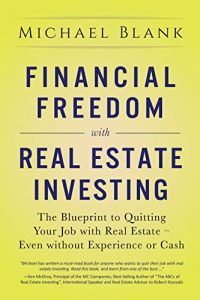
It’s my pleasure to welcome Michael Blank to the show. Michael is a full-time entrepreneur, investor, and coach. His main focus is multi-family real estate and he currently controls over $65 million of multi-family assets around the United States. He also helps students acquire over 750 units valued in excess of $27 million and he’s the author of Financial Freedom with Real Estate Investing. Michael lives in Northern Virginia with his wife and four children. Michael, welcome to the show.
Thanks so much for having me, Marco. I appreciate it.
It’s great having you on. I forgot to mention that you’re a good acquaintance and friend of mine. I get to know you here over a couple of real estate-related events. I know that you’re heavily focused on multiunit and apartments. Why don’t you tell the audience a little bit about yourself, where you came from, and how you got into real estate?
My background started like many of us, I was taught to go to school, get good grades and get a good job with benefits. That’s exactly what I did. I was never surrounded by any entrepreneurs so I didn’t know this whole thing about entrepreneurship until I read Rich Dad, Poor Dad. In my case, I was in my early 30s and I’ve just been through a software IPO. I have a software background. I was at the right place and time where the IPO just put a bunch of money in my pocket and I was like, “I’m pretty smart.” I read this book and I was like, “I’m such an idiot.” It doesn’t matter how much money you have in the bank or what your salary is, it’s about how much passive income you’re driving. I was driving very little of it and then I changed course. I wanted to pursue this path to permanent financial freedom. I had a good amount of money, but not enough to sit on the beach for the rest of my life.
My big idea at that time, which was obviously a bit misguided, was to plow my net worth into a series of franchise restaurants. I was surrounded by burger franchisees and they said, “It costs this much open. We’re going to hire an experienced multi-unit operator and we’ll sit back and count the passive income.” I was like, “That’s exactly what I was looking for.” That was my big plan. I’ll make a long story short. I subsequently lost my entire IPO net worth plus a couple of hundred thousand dollars in unsecured debt. I clawed myself out with real estate and like so many people, I did a variety of different ways. I wholesaled, I flipped three dozen houses and I did some apartment buildings. Eventually, I gravitated towards the multi-family. That’s my story in a nutshell.
I’ve always said that restaurants are one of the toughest businesses to be in because you’re married to it. You’re there for a long day with late hours. It’s a high-risk business and there’s such a high turnover. I just can’t imagine being in the restaurant business. I don’t know how you did it, but congratulations for going through that experience.
In my defense, it was set up as a passive investment. It was set up as, “I’m going to be the investor. I have someone else to manage it for me.” In the restaurants specifically, it’s very tough to be a full passive investor. With real estate in general, it’s a lot easier to be a passive investor but with restaurants, you just can’t. Then the recession did not help in that regard. It was a pretty painful lesson all around.
You mostly do multi-family investing, so that’s small to medium-sized apartments. Why did you settle on multi-family investing? What brought you to that point?
I flipped three dozen houses and I guess the problem was I was making money doing it, but the problem was it wasn’t as passive as I wanted it to be. I read all the books. I had my team set up and we were buying two houses per month. A lot of the houses I didn’t even see because of that system, but it was still a highly active activity. What was worse is that when we did sell the house, we put a bunch of money in our pocket, but the money stopped flowing. There was no residual from that. When I contrasted it with the twelve-unit small apartment building I had at that time, that thing was quietly sending me mailbox money every month. I was like, “Why don’t I just do more of these apartment buildings?” I hadn’t seen that thing in a year. I was like, “I should do more of these apartment buildings.” That’s exactly what I did. As the market started to change in 2012 to 2013, it was harder to do flips at the time and I decided to shift the majority of my resources to the multi-family. There’s a bunch of other reasons why I liked the multi-family, but that’s my shift into multi-family.
There’s a certain percentage of people that make that shift from building a portfolio of single-family homes. Then at some point in time, they get to ten, twenty, maybe more single-families and they start building up in terms of scale. They’re doing duplexes, fourplexes, eight and twelve-plexes and so for some people, it’s a natural migration. It sounds like you skip that step. You didn’t have a lot of buy and hold single-families, or did you?
I didn’t have a whole lot of buy and holds. I did have some. People do typically start amassing a portfolio of some size. It could be five or ten and then they realize that it’s going to take a lot more time to get to where they want to go. If they got there, it’s a challenge to manage portfolios of single-family houses. Some do it, but I think you’ve got to make a conscious decision that that’s what you want to do. What I like about the multi-family was that the property management piece was built into the business model. It’s unnatural for someone to self-manage a medium-sized, large apartment building. On the portfolio side, you tend to self-manage until you get a certain size.

With the multi-family, the passive component is already built into the business model, which I liked. I also like the ability to control the value more. With single-family houses, it’s all after repair value-driven and that is driven by the market. You could have a rental property that makes thousand dollars in rent and one next door that’s occupied by a family, which doesn’t generate any income at all. The value of those two houses is going to be very similar. With multi-family, as with any commercial real estate is, “I control the value based on the income of it.” I can have a box that’s worth $1 million and right next to it could be the exact identical box that’s worth $1.5 million. The only thing that’s different between the two is that one produces more income than the other. I could buy the $1 million box and through professional management over the period of one, two or three years, I could make it produce the income of the box next door. I can sell it for $1.5 million or better yet, I could refinance, pull the cash out of that and then do it again. I found that I had more control over the value of that. I can get unlimited financing that’s called non-recourse, meaning I don’t have to personally guarantee a loan. It’s awesome not having to personally guarantee a loan. Those are some of the reasons why I like multi-family.
The other thing I like is I could start small and then scale it at will. Let’s say you can’t wrap your head around the ten unit, then you start with a duplex. Once you do a duplex, people that want to do multi-family, invariably they’ll probably do a ten unit the second time around. The third deal is going to be around 25 units. The next progression is 50 to 60 and at that point, you’re at 100 plus. It’s just this phenomenon that allows you to scale in a very short period of time. As I looked at all the businesses I’ve done such as software, houses and multi-family, I kept coming back to the multi-family. In my opinion, it’s the best vehicle to become financially free especially in real estate, which is the motivation behind writing the book.
One thing you mentioned is about the market value of a property. Let’s explain that a little further. When you deal with the residential real estate, one-unit to four-unit properties, we’re dealing with appraisals that are based on market comparables. It’s what everything else is selling for, that’s what determines the value. With a multi-unit, meaning something that’s larger than four units, it’s based on the NOI or the Net Operating Income. Explain how that determines the value. There’s a percentage of audience that understand this but some don’t.
Imagine having an ATM and an ATM produces fees for the owner. Let’s say that an ATM is sitting at your local grocery store and it’s a high-end grocery store. Let’s say that the box produces $100,000 in income per year and fees. I would ask people, “How much are you willing to pay for this?” Some would say, “I’ll pay $1 million for that.” You would say, “How did you come up with that number?” He says, “If I paid $1 million for it and it produces $100,000 per year, I get a 10% cash-on-cash return. That’s attractive to me.” I said, “Great.” I asked someone else, “How much are you willing to pay for that?” They say, “We’re willing to pay $1.2 million for that.” I said, “Are you willing to pay higher?” They said, “8% cash-on-cash is pretty good to me. It’s in a pretty good area, so I’m not going to be dealing with people trying to vandalize it or break it.”
In nicer areas, people are willing to pay more for an asset and that multiple income is essentially something called a capitalization rate. This varies by asset type and also by location. It’s an inverse relationship, so the lower the cap rate, the higher the value. These cap rates are basically multiples of the net operating income. Using the cap rate which is well-defined and you ask brokers, “What’s the cap rate for multi-family around twenty units in this area?” “This stuff has been “trading” at 7% cap rate.” Knowing that, you can then simply apply that to the net operating income and come up with a value of a building. This is what appraisers use to value the building. In the single-family house, you do comps and in commercial real estate, you’re using income. It’s a fairly well-understood process.
In your book, you talk about multi-family investing and you feel pretty strongly about it as a vehicle to become financially free. Why don’t more people do it? Why don’t more people get involved in large real estate, 20, 50, 100-plus unit buildings?
When I say, “Let me show you how you can quit your job in the next one to three years.” They go, “Tell me more.” I said, “It’s with apartment buildings.” They go, “I’ve heard of that. That’s an advanced strategy.” “I do real estate and let me do some single-family house investing for the next five or ten years. I will then take that experience and the money I make, I will roll that into apartment buildings.” That’s a fine plan. A lot of people do it. The truth is that there are two main reasons people put the pause button on the apartment building. It’s because they feel like they don’t have the experience, so they feel they can get it through single-family house investing, which is partially true.
The other one is they don’t have any money to put into apartment buildings. They think they can get it through investing in single-family houses. All these are fine plans, but people have accelerated their plans by going directly into multi-family. The truth is that you can overcome the experience very quickly. In a matter of about 30 days, you will appear to be much more experienced than you are. You can overcome your lack of cash or resources by learning the art and science of raising money. It’s not something you can do in a relatively short order. If you can do that, you’ve just now overcome the two main reasons that people don’t get started with multi-family. Now, you’re in the game.
You just mentioned, “Appearing experienced.” How do you appear more experienced than you actually are without actually having the experience?
There are two ways. Number one is by educating yourself. We threw things like cap rate around earlier. A cap rate is one of those things like an insider language. It’s like when you start sailing, you don’t call something a rope anymore. There’s a special term for that. You have to use a special language. I flipped three dozen houses and I thought I was pretty experienced. I wasn’t using the special language and all sudden brokers would ask me to send them my proof of funds and they’ll send me more information about the deal. Every time someone asks you for proof of funds, you just sound like a newbie. That’s what I was sounding like as well. Step number one is to educate yourself so you don’t sound like a newbie.
The second thing is to build a team around you. You call the broker and say, “I’m working with Sam over here and they’ve managed XYZ property management company.” They go, “Sam’s a great guy.” All of a sudden, you’re talking about Sam and the 5,000 units that they already managed. Now the focus is not on you, it’s about the team that you’ve built around you. When you don’t have something, either cash or experience then find people around you and talk to others in terms of your team. In our experience, people who do that are not asked for proof of funds and brokers do return their phone calls. Twenty-one-year-old people get awarded $10 million deals because of that and this is without any prior experience. It’s something that one can do in a very short period of time.
Even if those people that have the experience, they are not partners of yours, they’re not in the deal, and you could probably bring them on as an advisor in your advisory board and you cannot lie. You could say, “Michael Blank or whomever it maybe is part of my advisory council or my advisory team.” They’re part of the deal but they’re not technically a partner. Does that work?
Absolutely. Building an advisory board is another example of talking about yourself in terms of your team. That’s a great example of that.

Let’s talk about the average person. If someone is wanting to get started in multi-family real estate investing and they don’t have experience or a lot of cash or even their own cash, how does the person get started beyond educating themselves? They’ve educated themselves now and they’re ready to go, but they don’t have the experience. Maybe they have some cash, maybe they’ve got friends and family. What’s the next step?
Let’s say they get educated, it could be my program or someone else’s program. We advise people to do three things after that point. Number one is to learn how to analyze deals. That’s a critical, fundamental skill to learn because you need it for everything else. You need it for improving your language. You need it to increase your confidence. To make offers, you need to be able to analyze deals. Once you get something on the contract, you need to see when you’re in due diligence, how what you find affects your deal. An analysis is very important. Number two is learning how to build your team. The idea is that you have your team ready to go on the ground before you put something on the contract.
Number three is you start raising money. There’s a system for raising money, it’s not complicated. Once you learn and see it, it’s something where you can go, “I can now raise money from people.” You start that process by intentionally building relationships with people and gently guiding the conversation to how enthusiastic you are about the real estate. What you’re doing is you’re trying to get other people to raise their hand and go, “I’m intrigued by what you’re doing. I have the means to invest and I’m interested.”
The funny thing is that people with money have at least three problems. Number one is they’re looking for a reliable return on their money and many are uncertain about the stock market. Number two, they want to do so with a reasonable risk profile. With the uncertainty of the stock market, some people are not as comfortable with that. Multi-family performed very strongly during the last downturn. Number three, they pay too many taxes on the money they do make. You, as a multi-family operator, can help people with means to solve all three of those problems.
That’s a big thing right there. That’s key. In the industry, the lingo we use is that we’re syndicators. You’re syndicating deals and we’ve syndicated deals. We just finished two cannabis-related deals where we syndicated or brought private money in. The layman’s term would be it’s a group investment. You’re the principal sponsor and you put a deal together. You bring in outside capital and they’re silent investors and private money investors in the deal. They participate in the equity and cashflow but essentially, what you’re talking about is what we refer to as syndications and lot of people refer to it as a group investment.
What’s great about this business with multi-family or cannabis or anything else is that there are different ways that people can participate in this. You just mentioned one of them, which is a passive investor. Passive investors have money and a lot of them don’t have the time or don’t have any interest in learning the actual asset class. As a passive investor, once you find someone that you’re comfortable with, you can just keep investing with them. The end result is exactly the same, which is a passive income and long-term wealth. Even the high-income earner eventually doesn’t want to be the partner of the law firm anymore. The other class is this class of money raisers. If you gravitate towards the money-raising side, you can raise money on behalf of what you do. You can enroll those people in the general partnership and you’ve been working with them as well. As a money raiser, you can accumulate a significant equity and you can be the operator or the syndicator as well. There are at least three different ways people can get started in this business.
Are you referring to a sub-syndication? Is that what you’re talking about?
Yes, it’s a sub-syndication. It’s not quite as formal as that. A sub-syndication, technically, is where someone creates their own syndication through a private placement memorandum and they write you a single check. It is essentially a sub-syndication. Let’s say three partners get together, you and two other guys. The three of you are out there raising money and essentially that’s what it is. Every partner has their own set of investors and they all bring their set of network investors into the partnership.
Let’s talk about finding deals. How do you find your deals? Any tips? I’m curious how you find your deals because cap rates today have been compressed in the multi-family and apartment space, so it’s become harder and harder to find good deals. They’re still out there, especially if you have good broker relationships. How are you finding your deals and what suggestions would you give to other people?
A key point here is a good broker relationship. That is the answer to your question. The larger question is, “How do you get good broker relationships?” The truth is that people are doing deals right now. It is arguably more difficult than in 2009 when everything was for sale and everyone was buying. The truth is that most of the time, people who are doing deals are hustlers. They’re out there talking to people, making phone calls, visiting houses and building relationships. Surprisingly, these people end up doing a deal. The people who don’t do deals make two offers and they’re like, “They didn’t accept my offer. It must have not worked. Maybe it’s me.” With any real estate, no matter what you do, it’s all a numbers game. If you don’t play the numbers game and if you don’t make 100 offers, you make two offers or your probability of actually getting a deal is very low. Just like in a single-family house, the same thing in a multi-family.
If you want to do deals on multi-family, you’re going to have to hustle. You have to make offers and you have to take your brokers out for lunch. The magic happens when you do that. You get a deal from a broker and you provide feedback within 24 to 48 hours, “This deal doesn’t work for me. Here’s what would and here’s why.” You meet them once or twice in person. What then happens is these brokers start calling you before everybody else. These are these pocket listing and off-market listings. That’s where the magic happens and that’s how people do the deal is through relationships.
The first deal is always the hardest to do, takes the longest and tends to be the smallest. Once the cat is out of the bag that you’re actually doing deals, now people come to you and you become this magnet. Brokers and investors start calling you. This is why doing your second, third and fourth deal is easier than doing your first deal, which is why I focused all of my resources in helping people do their first deal. The second and third follow in rapid and almost automatic succession. I call that the Law of the First Deal. I talk a lot about it in the book because that phenomenon is so universal. It simplifies the whole prospect of, “How do you become financially free? You don’t need 500 units to do that. Focus on one. Why don’t you focus on buying a duplex? If I can help you do that, the second and third one will come and within one or two years, you have replaced your income.”

I think that the law is pretty universal because even with us, working with our clients on purchasing single-families, duplexes, fourplexes, that when we first engaged with them, that first sale and investment that they purchased, it took the longest amount of time. There’s a lot of back and forth on the phone and via email. They’re educating themselves. We’re educating them. The second one is faster. The third one almost feels like there’s no communication between them because it’s so minimal. I completely believe that. I find this a little hard to believe at least as a seasoned person, but you say that you can do an analysis on a multi-family unit in ten minutes or less. How is that possible?
When I first started this thing in 2007, it took me four hours to make an offer. It’s because I didn’t have the tools we have now, which are a syndicated deal analyzer and this analysis tool. We didn’t have the technique around that. I would take this marketing package and itemize all the expenses. I would make some phone calls and do some research on the internet. I would try to produce an offer price or the max allowable offer. The truth is you don’t need to do any of that because you don’t even know how motivated the other person is. Variably, you will come up with an offer price that is 10% lower than the asset.
After four hours of work you say, “You’re asking $1.8 million but I’m offering $1.5 million.” There are crickets, there’s nothing. You missed the mark by a mile because the seller is expecting asking price or worse they’re getting offers at/or below or above asking price. You just wasted four hours of your life. What we do with a ten-minute offer is we use that cap rate. We use that net operating income and the cap rate and some rules of thumb. In simple terms, you take the income and there’s normally a vacancy factor. A lot of marketing package will say, “There’s a 5% vacancy.” The truth is more like 10%, so you adjust the income.
The expenses are always underreported. Let’s say it’s 38% of the income. The truth is that the actual expenses are about 50% of the actual income. You adjust the expenses and then now you have an adjusted net operating income. Then you apply the cap rate to that and you get a modified fair market value for that. That’s essentially a ten-minute offer in a nutshell. When you get a response from the broker, “Why don’t you put something in writing? What did you have in mind?” In other words, you’re being asked to make a more formal offer. At that point, you can now get into it and spend a few hours using a tool like the syndicated deal analyzer to hone your offer. There are a very few times where I get a response or a counter offer or something like that. That’s the secret behind the ten-minute offer.
Comment on your book. Who’s your book for? Why did you write it?
It’s called Financial Freedom with Real Estate Investing. It’s for anyone who’s on a journey, like I was, for financial freedom. They’re thinking in their minds, “I’m going to use real estate.” In doing it, most people are thinking single-family houses. Buying a single-family house one per year is a great ten-year retirement plan. Some people want to accelerate that and I’ve found that with multi-family you can accelerate it. In one to three years, you can replace your expenses. It’s by focusing on the law of the first deal and focusing on your first deal to get started. I have a lot of case studies in the book because a lot of people say, “It’s impossible to cover my living expenses in one year.” We have a lot of case studies in the book that show how people have done it and that phenomenon is in fact so universal. That’s why I came up with a name for it. That’s why I wrote it because my journey to financial freedom was very rocky. It involved losing a couple million dollars and slowly clawing my way back versus people who have done it faster with a much more direct route.
After studying that through my podcast and our educational program, it became very encouraging that these things are possible. Not only that, but we have a roadmap. I spend about a third of the book addressing that this is possible. You can overcome your lack of experience and money. I will show you actually how to do your first deal. I can’t do that unless I have you agreeing with me that this is actually possible. Once I get you on board, I will show you how to do it.
Tell us what the one thing people should do to become successful?
It’s fundamental. People should become very clear about what they want. People go to real estate investor meetings every month and the reason they’re there is that they want to quit the job with real estate. Sometimes, it’s not clear what that means. For example, in my mind like many other people, I associate financial freedom with becoming a real estate investor. That may not always be the same. For example, if I do build up a portfolio of twenty or 50 rentals, it may take me a while and it may be a lot of work. I came to the realization that it’s not passive enough.
I achieved my goal to become a real estate investor, but I didn’t achieve my goal of financial freedom. It’s like I’m running up this ladder and I’m running fast. I get to the top of it and I go,” I’m at the top of the ladder,” and I discovered that ladder is up against the wrong wall. I encourage people to keep their minds open. There are so many different ways you can make money and it’s not one thing is better than the other. It may be mobile home parks for one. It may be single-family house flipping for the other. Just make sure that you approach it with the right motivation. In other words, “Is the strategy I’m doing aligned with what I want?” In my case, the answer is multi-family and that might not be the case for everybody. Just have an open mind. A lot of people dismiss multi-family because of what they think they know about it. My call to action is to take a look at it. Take a look at the book and see if that’s something that might be for you.
I made the comment that there are 101 ways to make money in real estate. You and I both agree that having buy-and-hold passive income rentals, be it a portfolio of single-families, duplexes, fourplexes or multiple units within apartment buildings, will all get you to the same destination, which is passive income for financial freedom, which ultimately leads to time freedom. There’s no right or wrong way to do it. We have a client that I interviewed in Episode 97. That client of ours started from zero four years ago when he started working with us. Today, he has over 35 rentals. He built up 35 plus rentals in four years and he’s making over $10,000 a month through passive income. How did he do it? It was through single-families, duplexes and fourplexes.
I also know people who have become very successful through apartment buildings and multi-unit properties. I think you’ve got to be comfortable with it. Not everybody’s going to like single-family homes, not everybody’s going to like apartments, but they’re all tried and true vehicles to help you achieve those financial goals. You and I have both experienced that in different ways. We also know a lot of people who are living the dream, doing what they want to do and accomplishing their goals. They picked the way, path or vehicle that they want to do it with.
For me, the answer to that question is that the thing that people should do to become successful always starts with what’s between your ears. That’s educating yourself, building confidence, building up your competence and then taking action on it. A lot of that resonates with you and what you’re talking about in terms of educating yourself, setting your goals and then taking action. Learning what you need to learn, working with the right people and surrounding yourself with the right team. There’s a lot of overlap and commonality in the beliefs that successful people have that invest in real estate like yourself. Michael, anything else you would like to share with our readers?
I appreciate what you’re doing because the education you’re providing to passive investors is key. Especially if you’re a passive investor, there are so many great investments. You mentioned that cannabis opportunity, turnkeys, things of that nature, multi-families is another asset class and there are others. A well-rounded passive investor should tend to diversify their investments. The more different asset classes someone can get educated about, the better it is. I appreciate what you’re doing for the passive investors because there is a lot of miseducation out there and a lot of misinformation as well. I appreciate you bringing on the multi-family aspect of it.
It’s good to expose people to the different options that are out there and the different avenues that they can take to get to where they want to get because it’s not a one-size-fits-all. Some people will build a large portfolio of multi-unit properties and other people will happily build a portfolio of single-families and duplexes. They both work. It’s just about what feels comfortable to you, what you understand, and what speed you want to get there. Michael, tell our readers how they can find you, your website and your book?
You can find me just by typing in Apartment Building Investing in Google, I should be on the first page. The website is TheMichaelBlank.com. The book is on Amazon and it’s called Financial Freedom with Real Estate Investing. It’s a bright yellow book. Those are some different ways that people can find me.
Michael, I appreciate you taking the time to speak with us. Thank you for coming on.
Thank you for having me, Marco. I appreciate it.
– – – – – – – – – – – – – –
Download your FREE copy of: The Ultimate Guide to Passive Real Estate Investing.
Get your FREE coffee mug by leaving us a Rating and Review on iTunes. Here’s how.
See our available Turnkey Cash-Flow Rental Properties.
Please give us a RATING & REVIEW (Thank you!)