

I have a very special guest today, not only a friend, but one of our preferred mortgage lenders that we work with here at Norada Real Estate Investments. So I got talking to her, I don’t know it was a week or two ago, and I thought, Hey, you know what? I need to get you on the show. We need to talk about what’s going on in the world in terms of mortgage lending and trends that you see. And so today I have with me Caeli Ridge, and Caeli’s the president and CEO of Ridge Lending Group. And she has been a well-established real estate investor for over 20 years now. You wouldn’t know that because she looks so young, but she has had properties all across the United States. So she is a seasoned investor and she has worked with tens of thousands of real estate investors all over the country, helping them put together their real estate portfolios to help them realize their dreams as a real estate investor. So with that Caeli, welcome to the show.
Thank you so much, Marco. I am very excited to be here. Hopefully, I’ll be sharing some valuable content to you and your listeners. Thank you.
Download your FREE copy of The Ultimate Guide to Passive Real Estate Investing.
If you missed our last episode, be sure to listen to Covid’s Impact on the Rental Market – Past and Future
Enjoy the show!
– – – – – – – – – – – – – –
Download your FREE copy of: The Ultimate Guide to Passive Real Estate Investing.
Get your FREE coffee mug by leaving us a Rating and Review on iTunes. Here’s how.
See our available Turnkey Cash-Flow Rental Properties.
Please give us a RATING & REVIEW (Thank you!)
SUBSCRIBE on iTunes | Stitcher | Podcast Feed
Well, I know you can, that goes without question. So for those people who really don’t know who you are or much about you or Ridge Lending Group, why don’t you just give us, an overview about yourself and your company?
Sure. So the ongoing soundbite is that Ridge lending is a second-generation company that focuses pretty much exclusively in the non-owner occupied versus the owner-occupied side of residential real estate investing. We have a nationwide footprint and almost every state I should probably for compliance reasons mentioned, which we are not in our seven of them. Let’s see if I can do it by memory, Alaska, Maine, North Dakota, New York, Vermont, West, Virginia, Wyoming. Got it. Otherwise we’re everywhere. So I think that’s a real value add for most of our investors. Like you said, I’ve been doing this for over 20 years. And I think one of the unique things people find out about me is that I am not real estate investor and having worn both hats as the lender and investor, hopefully, add some credibility to what we bring to the table. But my personal focus has really been the education of the individual investor from that lending and underwriting perspective, because I think that everybody listening will agree that the learning curve in real estate investing is pretty intensive just on its own.
So when you start to fold in all the financing part, I learned that it’s that piece that people tend to be a little bit overwhelmed by in some cases intimidated by, but the leverage is going to give us our greatest rate of return. So I just think it’s very important to have some arsenal, some information, some definitions what’s going on in the underwriting side of all of this, teaching them some of the language about it. Cause it is like a whole new language and preparing them to understand how to optimize most important of all right, how do they keep their debt to income ratio at its lowest, which is optimal for qualifying or their credit score at its highest? Are there assets available as need to be for underwriting guidelines? So those are the things. If I were to say, you know, a true value add the education that Ridge provides its clients I think is very valuable. And then finally I would comment that we are not a one size fits all lender because we’re a direct lender. We have a very diverse menu of loan products for our investors that don’t just start and stop with the Fannie Freddie stuff. We call those the golden tickets we’ve got non QM products, certainly happy to talk about that. We have short term bridge loans. We have some commercial funding. So we have a pretty diverse mix of loan programs.
Yeah, that’s a lot. The financing side is the part. I think most people dislike real estate investors just don’t like to compile all the documentation and have to go looking for things. And it’s, it’s kind of a torturous process, but it’s a necessary evil because we want the leverage. We want the financing. It’s one of the beautiful things of real estate to be able to put as little as 20% down and, you know, control a hundred percent of a property. So, but fortunately, when you’re working with someone, you put the file together. One time you can keep buying property and often all you have to do is just refresh the file with the latest bank statements. So you do the hard work one time, and then you just refresh it as you go. And you can keep buying property. So it’s not all that bad people, you know, suck it up.
Yeah. Thank you. I’m so glad you said that because actually I probably should have mentioned exactly. We call it the gauntlet of pre-qualify files of blood and DNA samples is the joke that I make. Right. Once we have the bones, we do not have to take it for the exhausted free fall. We do just refresh outdated documents and things like that. So yeah. Good point. Yeah.
So here we are recording in the middle of December. This will probably be out very soon, like as in a week from now and we just had the elections and now we have potentially a change of guard come January. So not to get political, but you know, politics and monetary policy and the fed and all that stuff will tend to shift things in the economy and also affect rates. Not that I want this show or this episode to be all about mortgage rates, you know, it’s kind of bland and boring. Let’s talk about things that are a little more exciting, but I am going to ask you one or two questions about that in your opinion, you know, how does the change in government that is coming up and around the corner affect the mortgage landscape going into 2021? Because everybody’s thinking about what do I do going forward in the new year?

It’s a very good question. And one that I’ve been answering more often as of late and the impact is huge. So I’m going to take us a little bit in the weeds here. I’ve got to go back a few months. You know, a lot of people were projecting that Trump might win this thing and have another four years. And under that scenario, there was a lot of concern that the director that Trump appointed to the FHFA, Federal Housing Finance Agency, Mark Calabria, who has been a huge deterrent of Fannie Freddie and the conservatorship that Fannie and Freddie have been in since the 08 – 09 crash. He has been working under Trump’s rule to dismantle the conservatorship, privatized, Fannie Freddie, and open up the mortgage, backed security playing fields in wall street again. Okay. You know, I have personal feelings about this. I will try to reserve a lot of that because like you said, I don’t have any intention to making this a full conversation, but the release of conservatorship, Fannie-Freddie conservatorship, if that had played out and it seemed to have been on its way, whether it happened or not with Trump winning and or not winning was yet to be seen.
But I think that would have had a pretty devastating impact on the lending landscape longterm. I think that ultimately removing conservatorship good or bad thing, I could play both sides of that argument, but in the current environment because of the pandemic and because of everything that’s going on, I think that the release of (inaudible) right now would have been disastrous. So all of that said, I think that Biden’s win is absolutely going to kind of protect that from the time being it’s going to be system’s normal. We’re not going to see too much change where that’s concerned, but had Trump won and the conservatorship went away. One of the biggest changes we would have been faced with is the 30 year fixed rate at, at three or four, even 5% interest rates would be gone. That stuff is not going to be applicable anymore because if Fannie and Freddie are no longer in that conservatorship piece, that means that the United States government guarantee or that insurance policy for those mortgage backed securities is also gone.
And there’s no investor on the planet. That’s going to lend somebody, especially on an investment property, a 30-year mortgage at three and a half percent. It’s just not going to happen. So rates on a three-year basis would go up adjustable rate mortgages would become sort of mainstream again, which isn’t necessarily a bad thing. Again, I can argue both sides and happy to do it if you’d like me to, but that’s probably what we would have seen in early 2021 is the 30 year fixed model would be wildly changed from what it is today and what I think we’re going to continue to see for the foreseeable future.
That’s a pretty strong statement. I have a hard time seeing the 30 year fixed going away because we’re so accustomed to it. And our consumer base really just buys housing and lives off of that 30-year fixed-rate mortgage. So you’re saying that it could have gone the way of Canada, where you have three to five-year terms over a 25 or 30 year amortized loan.
In fact, the United States is one of two countries on the planet that offer that 30 years. Right? So Canada and almost everybody else. Absolutely. That would have been the norm to keep those interest rates low. Now, if I may, I’m just going to offer a couple of devil’s advocate comments. Okay. The 30 fixed model. I love it. Okay. I lived through 08 – 09. So I had six months arms. I had adjustable-rate mortgages, et cetera, et cetera. And while they’re not as dangerous as some, I think believe today, the 30 years fixed mortgage is more of a psychological play. It’s just the truth. And I don’t mind that I liked that, that sleeping better at night knowing that I have this rate fixed and locked in for three years. But the reality guys is that the average shelf life or a 30 year fixed, and this is her primary residence. We assume that a rental is even less right now is about 7.2 years, the life cycle of a 30 year fixed. Okay. The percentage of people that start with a 30 year fixed and pay off in 360 months, 30 years later is less than 1%. Right. So, you know, just food for thought.
Yeah, I know what you’re saying. And I tend to agree. However, if you lock in at a low rate and rates aren’t going lower, or you don’t refi, it’s nice to have that fixed mortgage payment over the long life, because number one, your tenant is paying it off. And I say this so often when your tenants paying it off, not you, but the other thing too is that your mortgage payment doesn’t adjust with inflation. So it actually becomes cheaper every year because you’re paying it off with inflated dollars. And that’s the beautiful thing about locking it in. So that’s why I’m a fan of the 30-year.
Access equity, right? I mean, there’s other ways that you can look at there’s there’s I think that as we start to open up a little bit more of those HELOCs and secondly position for investment properties might be more available. So I agree with that.
So just wrapping that up on the politics, do you think it makes a difference who’s in office? I mean, clearly, they can affect policy, but does it really make a difference?
Yes, I think so. And I think that in large part, it’s going to have to do with the appointees that are the watchdogs of our industry, the FHA, the CFPB yeah. And, and having those dynamically different viewpoints and regulation versus not, I’m not, I’m not big on regulation, but at the same time that regulation in in many ways is important, but yes, I think that it makes a difference.
Okay. So 2020, this is kind of been the year of COVID. It seems it’ll certainly go down in the history books as you know, the year of the pandemic, but how has COVID affected mortgage lending? If at all.

I have been doing this for a very long time and in my 20 plus years, I’ve never seen anything like this. The mortgage industry, I think in large part has actually been able to come to the rescue. We have seen unprecedented volume, largely due to rates, right? Low, low, ridiculously low-interest rates. I have some stats here. I was going to read just to kind of put a few things into perspective and then I can forecast what, you know, some economists and mortgage brokerage associations are predicting for 2021, but the volume for it, let’s just say refinances year over year. And I think was effective. December are up 141% from the prior year. The volume because of the low interest rates have created some pressure points. Let’s say let’s call it pressure points. There just simply aren’t enough human bodies in the mortgage industry to accommodate the massive influx of mortgage applications.
And it’s largely refinance, but purchases and new builds have been extremely high. Some of the highest, I think on record. So, you know, COVID has actually been the sounds crazy, even say a love a friend to the mortgage industry. And I think that it was extremely beneficial to Americans to have access, right? Because a lot of people right now more than ever really needed to get into their equity, tap into that equity and utilize some of that for sheer survival. So cost of housing is down. People have been able to get into single-family residence that may have been in the city and urban areas kind of close in and wanting to get out soon. There’s a lot of different reasons. I think that COVID has really been a good part of what has propelled them mortgage and lending and housing industries this year.
Yeah, I tend to agree. I know we talked about this very briefly before we started recording, but it’s, you know, for a lot of people it’s been a terrible year, you know, with unemployment furloughs, whatever, it may be a lot of businesses, unfortunately shutting down like restaurants and, you know, smaller retailers, but on the flip side, a lot of businesses and industry, and, you know, you mentioned that yourself, the mortgage industry, certainly for us in the real estate side, it’s been an incredibly busy year. In fact, we, I think we’ve had three record months this year where we’ve broken, like by long shot some of our previous records. And I’m very thankful and grateful for that. But what’s interesting is I would think that a lot of people would have fear of certain things, fear of being in certain asset classes, fear of the stock market, but, you know, with the monetary policy and all this new money being created, it’s really done nothing but fuel the stock market and people are still in the stock market and they know that they’re nearing a top.
And it’s just a matter of when not, if you know, there’s going to be a correction, but I think that also has helped fuel your business and ours and other people in real estate because one, you know, they recognize it’s a solid asset class. It’s a hard asset to interest rates are historically low. In fact it real estate is more affordable today than it was a year ago, even though prices across the country in most markets have gone up. The reality is as the mortgage payments have come down because interest rates have gone down. And my prediction is that the mortgage rates will stay flat if not come down ever so slightly more in the new year. That was my prediction. But also that’s the feeling of a Doug Duncan, the chief economist for Fannie Mae. So it’ll be interesting to see what happens going forward, by the way. Do you think rates are going to change in the new year? Do you think they’re going to change or go up or down?
I think that rates today, we’ll probably say relatively flat throughout the remainder of 2020, do I think rates are be to go down in 2021? I think that the level you said of how much that’s possible is going to be fairly inconsequential. I think maybe they could come down, but by how much I think would be such a minor thing, Marco, I mean, there’s just really nowhere for them to drop below, below right there as low as I think they can really legitimately go without there being some other really bad things happening as a result of it. Let’s I mean, yeah. So maybe just by a sheer percentage, but since you brought that up, maybe it would be helpful to kind of quantify for those that are real rate watchers, which I get rate’s important. I understand. But I think people are often very surprised to learn that largely depending on the loan size itself, a margin of interest rate increase or decrease is pretty inconsequential to the big picture payments, right? On a hundred grand. The difference in the principal and interest payment using a quarter point either way above or below is, you know, 7, 8, $9 a month. So it’s not something to, I think, get too tied up with if you’re in that price point range. But anyway…
Since you brought it up, I’ll piggyback one thing off of that. I’m going to repeat this in another episode, for sure. But it’s important not to be penny wise and pound foolish when it comes to mortgage rates. Because even if rates were a full percentage higher than what they are now, they are still very low historically speaking, and it’s still cheap, cheap money. You have to realize that your returns, your gains on your cash on cash return, the amortization of loan and the equity gains over time from appreciation far, far outweigh what the delta is or the difference in your monthly mortgage payment with a quarter point or half point change in the interest rate. There’s not even a comparison. It’s like a drop of water in a large bucket. That’s how different it is.
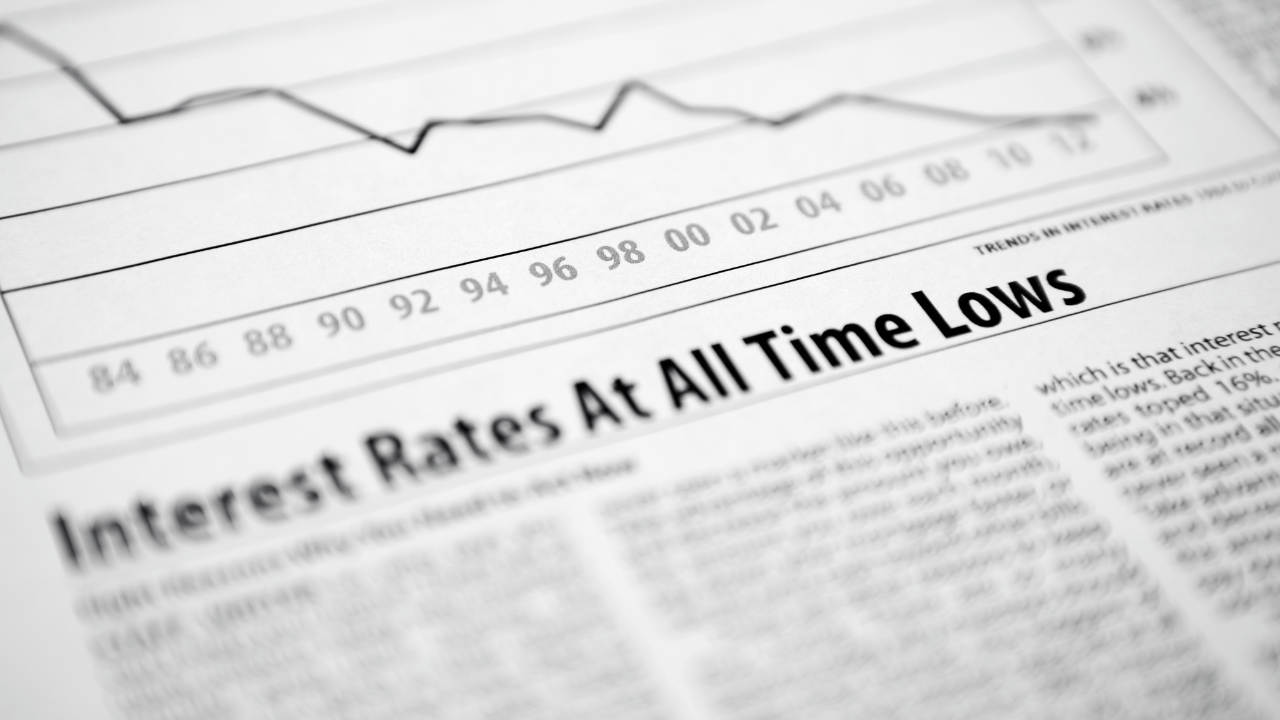
Well, I don’t remember too. I mean, as interest rates go up, what happens to rents, right? They don’t go at the same time. Right. But when rates rise, we obviously always will see the rent baseline increase, you know, trailing that over time. So as investors, I think that largely we’re pretty insulated from any huge rate swings. Absolutely. Right. It’s a different story or ability, et cetera. But as investors, I feel like they, a lot of people mistakenly put too much emphasis on the rate itself. That’s, that’s my opinion.
And I agree with you. And so this is a good segue. I mean, we’re kind of talking about trends in a way, but do you see trends? Are you following any trends and what trends do you see going into 2021 that might affect real estate investors aside from rates? Of course.
Aside from rates that, so the, and I did, I typed out some of the starts and, and some of the matrix. So the National Association of Home Builders, NAHB, they have a benchmark or a matrix that is used. And while December’s report came in a little less than November, November was at a record, I think it was 90. And the matrix starts from zero to 100.
You’re talking about the home builders index? Oh yeah.
So if we’re looking at that, November was 90, I think December dropped to 86 and I, you know, a lot of the news outlets, you know, latched onto that. And, and you know, this is a first sign of everything is going to fall, you know, hell in a hand basket kind of thing. However, you know, I feel like that’s quite misleading because if you look historically, I think 1985 is how long the matrix has been around. So over 35 years, November was the highest it’s ever been. And on a scale of zero to a hundred, if you’re at 50 and above, we’re expanding. Okay. So they didn’t finish the sentence. UI really think that housing and lending combined all through 2021, and as far as into 2023 are going to remain very strong. That’s my prediction.
I agree. I’ve been following the index as well. And it’s amazing how high it’s been. In fact, if I’m not mistaken, I think that’s a historic high. It’s never been, it never broke 90.
Nope. Correct. And that was last month.
And, you know, I think it’s important to mention the reason why it’s so high and why builders are so bullish. And it’s what I’ve talked about for a long time now, but especially in the last two months, and that is, there is such a shortage of supply, strong demand growing demand. And we’re not keeping up with new household formations, which means that if you’re a home builder, you’re in a great position because you’ve got a built in market that is hungry and in need of housing. So not everybody’s going to buy that’s where we come in as real estate investors, you know, we need to have that supply provided to the rental pool out there. And so I’m actually looking at building some rental properties in Florida right now that are new construction, just because of that, because I just know there’s a lot of people moving to Florida and there’s strong demand and, you know, prices are going up and it’s just, you know, all the cards are stacked in my favor.
Great. And I mean, I won’t spend any time on this, but like you, I am looking very seriously at joining with a established builder in South Carolina, actually a large community plan, unit developments, new construction for the very same reasons. The demand is there, the need is there. Why not fill it? I mean, anyway.
Yeah, for sure. So kind of wrapping that piece up, are there things that real estate investors should be aware of going into 2021? I mean, we’re talking about the concepts and what’s going on, but me listening to this as a real estate investor, what should I be aware of?

No, I think I said earlier that business as usual kind of, I think that the lending platform is going to remain relatively unchanged, you know, because of COVID a portion of the lending platform took some hits, but that was through the FHA, the lower down lower credit score individuals, right. They really kind of were scrutinized heavily us investors. And I don’t mean to keep going back to the 08 – 09, but post 08-09, we just got the stuff kicked out of us. Right. And the, the level of qualification that we needed before versus what we needed post 08-09 was dramatically different. We had to walk on water , post 08-09, 20% down, minimum, much higher credit scores, much higher reserves. So I feel like that over the last 10ish years, we’ve been living in this already over qualified space.
So COVID, hasn’t really changed that for us. So I think that, you know, going forward, I don’t think that what I would advise people keep doing what you’re doing, keep your credit score as high as you have been the reserves aren’t going to change, these are not going to change. We, we’ve already established that. We believe that the housing and the starts there are going to remain very strong. I think renters are going to be wildly available because people are continuing to move out of even if they can’t qualify for their own or they’re, they’re not ready to jump into home ownership. They’re going to want to be renting in a home versus the apartment style living. I think we’re seeing that in broads right now. So to be prepared for, I would just keep your eye on the mark and know what your goals are and keep educating yourself, keep your ears and, you know, checking with you and your lender like us separating potential changes. I mean, that would be the, the only thing I can point to right now.
Yeah, okay. Well said foreclosures, I’ve answered this question multiple times on the show and I have my opinions and I have my own data, but I’m going to ask your opinion. What do you think is going to happen over the next 12 to 24 months? If anything, at all, as it relates to foreclosures and foreclosure opportunities.
So the forbearance, right, which was a big part of the first cares act, the ones that were in forbearance, what we’re finding or what the data is telling us right now that the new applications for forbearance are actually on the rise a little bit, the existing forbearances that expired. Those are being modified. So they’re not being brought current as what that means. The individuals are not able to bring those past unpaid mortgage payments. Current they’re modifying the loans where either the servicer, the one that’s got the mortgage back security, the servicer is either tacking it onto the back, or they’re reducing the principal or some combination of the two, those individuals that potentially are still struggling because of COVID. I don’t know how any new provision of the cares act is going to potentially protect them and allow them more time under forbearance, which means foreclosures. I am certain that there will be services out there that their bandwidth has been stretched to the point that they can’t offer the additional assistance without damaging their own need to live. So I expect to see more closures as a result of the forbearances that continue. The question is going to be what the federal government may come in and subsidize or do for them. But I, there will be some opportunity for investors on a foreclosure basis to be able to have more inventory available to them that isn’t the new construction.
Sure okay. Interesting. I think there’s a lot of truth in what you just said. I, in fact, I don’t disagree with anything that you said. The one thing, the one big thing that I think is a saving grace, is that a lot of people, even if behind have a lot of options today, because most of these properties have enough equity that it gives them options. It’s not that they’re underwater. Like we saw in 2008 where people were upside down and property values were below what was on the property. There’s enough equity out there. In fact, I don’t have the data in front of me, but there is a lot of equity out there, like in the trillions of dollars. So people are actually in a good position where they have options because they have a lot of equity in their home. And so lenders, I believe, would be very willing to make modifications, to allow them to stay. Even if they’re in default, that’s where the the, you know, the modifications come in and whatnot. I just think we’re in a different time and space compared to 2008.
A 100% night and day that said, let me offer a couple of thoughts though, from an underwriting perspective, how the forbearance can impact, let’s say that aside from the service or offering additional recourse or allowance beyond what the current contract for the forbearance gave them, let’s say that they wanted to refinance some of that tap into some of that equity and full borrowed funds are non-taxable right? So maybe they want to pull some of that and utilize pay. If you are in forbearance, even though it doesn’t negatively impact credit score that’s for the cares act. Okay. A lending conventional lending perspective will required that the forbearance is removed is canceled. And then you’ve got two options past that to qualify for any kind of financing. One, you’ve got to bring it all past due payments current, and then you’re eligible to refinance immediately. Or you have to remove the forbearance, get out of the forbearance and finalize whatever modification there is there and make three consecutive mortgage payments before you’re eligible for conventional financing. That might be useful for some people to take here.
Interesting. Okay. So that’s not proposed, that’s actually a, a given?
Yes. That’s what it is today.
Interesting. Okay. Okay. So let’s start to wind some things down here. Let’s just quickly talk about loan products. What loan products have gone away? I know things change. It seems a year over year and sometimes every few months, what has gone away and what is here today?

So early on this year, we had some pretty significant casualties. We lost non-QM. QM stands for qualified mortgage. For those of you that aren’t aware of that term, Fannie Mae, Freddie Mac are defined as qualified mortgages. So everything outside of that is now non-QM is not just for investors it’s for anybody that just doesn’t fit into the conventional loan box that went away almost immediately with COVID. It came back. Ridge Lending is now doing non QM for investment only. We’re not opening it back up to owner-occupied just yet. Jumbo loans went away for a minute. Those are also back. We have a product called the all-in-one Marco. I think we’ve talked about this. This is the first lien HELOC that went away for a time. We brought it back. It is now suspended through the end of the year, but only because of sheer volume and interim times we’ll have that back person of 2021.For those that are in that, that first lien HELOC product. Otherwise, you know, everything else is pretty much back in the mix. I will say that I believe non-QM will probably start to improve its pricing. First quarter of 2021. We just started non QM, an unconventional for a quite a while. The spread between interest rate comparison between a Fannie Freddie and a non QM was pretty wide. And I feel like at the end of 19, early 2020, we started to really see that margin narrow. And it was a lot more competitive as a result of COVID we’re back here again. So I hope that in the first quarter of 2021, the difference between a non QM rate and a conventional rate will come a little bit closer together again, right now, as an example, let’s say that apples to apples scenario, Fannie Cray is three and a half. The non QM is probably six, and that’s a pretty big spread between the two. Usually it’s a point to point and a half. So otherwise, you know, the products are alive and well for the most part.
So for a real estate investor, what do you think the spread will end up being in the new year? Once that spread starts to diminish? What would be a typical spread in a normal year?
I think that if we’re at three and a half on a conventional if we can see, you know, a maximum of five on a non-QM, we’re happy.
You’re talking about non-owner occupied here?
Correct. Yeah. Three and a half is a real number for non-owner occupied today, depending on the variables of the transaction, but that’s a real number 30 year fixed. I mean, we’re locking three and a quarter on a 30 year fixed rental property sometimes lower.
Yeah, isn’t that incredible?
All right. Well, last question, tips, and advice. What would you advise people do or think about right now if they’re thinking about investing in real estate or more so in real estate going forward?
I would say that property manager needs to be vetted. That would be the first thing that I would be once I’ve identified the property, that the numbers are looking good, et cetera, the property management would be a real big thing that I would want to make sure that I’m comfortable with and understand all the moving parts there from a financial perspective, just make sure that all of your documents are up to date, right? Every time you get a new pay stub or a new bank statement, things that expire and renewed, just stick it in there and get it to your lender. And you want to be working with resources that focus on education, obviously like Norada. And, you know, he didn’t pay me to say that.
I appreciate it.
But surrounding yourself with the people that have been doing this a long time, that do provide that education, I think is a big thing for investors that want that turnkey experience.
Yeah. I call it the team. You have to have the right team. Yeah, absolutely. Aside from your contact info here in a minute, is there anything else you want to share? Something I didn’t ask you because sometimes people come on the show and they have, you know, something they really are burning to talk about.
I would cover it, everything. I think, I think we’ve had the gamut. Okay. Yeah. Then just start contact information. Should I?
Yeah. So how can people find out more about you and your company?
So there’s several ways to reach us, obviously our website at ridgelendinggroup.com. You can email us at info@ridgelendinggroup.com or you can call us toll-free at 1.855 .747.4343, 1.855.74.RIDGE is an easy way to remember that.
Perfect. All right, well, I really appreciate you coming on the show. This has been fantastic. Hang tight, and I want to talk to you actually about something on my own side of the equation, but for everybody listening, I appreciate you guys listening in, download your free report on our website, The Ultimate Guide to Passive Real Estate Investing. It’s always there as a free download. If you are thinking about real estate or you have questions about financing, you can contact Caeli. Of course, you reach out to our investment counselors for a free strategy session. Other than that, if you have a question about real estate investing to shoot it over to me, go to AskMarco.com and that’s it for today. Thank you for listening. And we will see you all on our next episode.
Download your FREE copy of: The Ultimate Guide to Passive Real Estate Investing.
Get your FREE coffee mug by leaving us a Rating and Review on iTunes. Here’s how.
See our available Turnkey Cash-Flow Rental Properties.
Please give us a RATING & REVIEW (Thank you!)